Why are claims remaining denied even when services are completely documented? CO-50 Denial Code is one of the most common causes of medical necessity rejections in billing operations. In 2026, about 9%-11% of claims will be denied initially, with documentation and medical necessity difficulties accounting for the majority. As payers rely more on automated claim review systems that follow precise clinical guidelines, the number of denials is increasing.
CO-50 Denial Code cases are becoming more frequent because insurance systems now use tighter validation of diagnosis, procedure linkage, and supporting clinical notes. Studies show that nearly one in three claims experiences some form of denial, and a significant portion is related to insufficient medical justification or coding mismatches. Understanding this denial helps improve claim accuracy, reduce rework, and strengthen documentation practices, while effective denial management services help reduce delayed payments and higher accounts receivable pressure.
This guide explains the CO-50 Denial Code in a structured way, covering its causes, handling process, impact, and prevention strategies for healthcare providers, coders, and billing teams.
What is the CO-50 Denial Code in Medical Billing?
CO-50 Denial Code is used when an insurance payer determines that a billed service does not meet medical necessity requirements. This denial directly affects reimbursement, claim approval rates, and revenue cycle performance across healthcare practices.
Meaning of CO-50 Denial Code
CO-50 Denial Code indicates that the payer reviewed the submitted claim and concluded that the treatment, procedure, or service was not medically necessary based on the patient’s diagnosis, policy terms, or clinical documentation. In most cases, the denial occurs when the attached documentation fails to explain why the service was necessary according to the payer’s rules.
Medical necessity decisions are commonly based on:
- ICD-10 diagnosis codes
- CPT or HCPCS procedure codes
- Clinical notes and treatment history
- Payer coverage policies
- National or local coverage determinations
How Insurance Companies Apply CO-50 Denials
Insurance companies evaluate claims using internal medical review criteria and coverage policies. If the submitted documentation does not support the billed service, the payer may deny the claim under CO-50.
Common situations that trigger this denial include:
1. Missing clinical justification
2. ICD-10 and CPT code pairing
3. Non-covered services under the patient’s plan
4. Lack of prior authorization
5. Incomplete physician documentation
Common Causes of CO-50 Denial Code
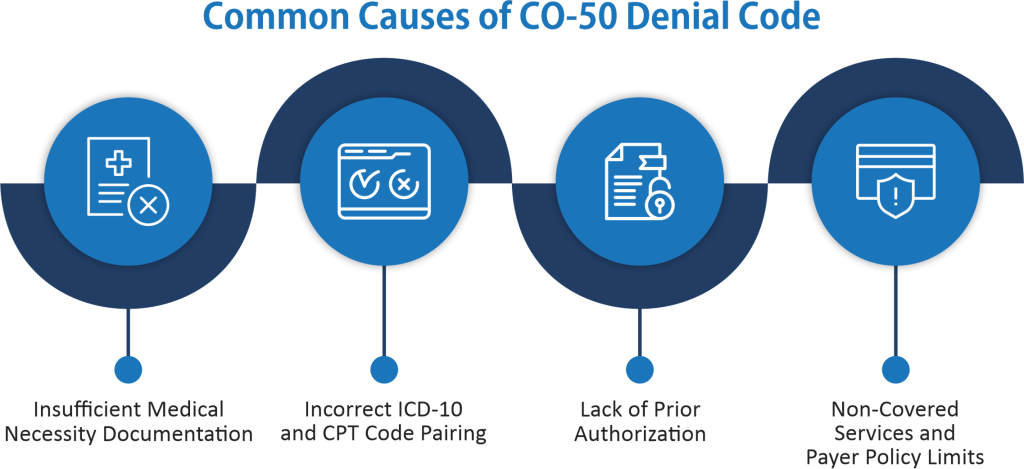
CO-50 Denial Code usually occurs when the payer determines that the submitted service does not meet medical necessity requirements. Most denials are linked to documentation gaps, coding errors, or payer policy violations during claim review.
Insufficient Medical Necessity Documentation
One of the most common causes of CO-50 denials is missing or unclear clinical data. If physician notes, treatment plans, or diagnostic findings do not support the billed procedure, the payer may reject the claim.
Missing documentation may include:
- Progress notes
- Physician orders
- Test results
- Patient history
- Treatment justification
Incorrect ICD-10 and CPT Code Pairing
Claims are often denied when diagnosis codes do not support the submitted procedure code. Insurance systems compare ICD-10 codes with CPT and HCPCS codes to determine whether the service qualifies under medical necessity guidelines.
Common coding issues include:
1. Invalid diagnosis-to-procedure linkage
2. Outdated billing codes
3. Incomplete code selection
4. Incorrect modifiers
Lack of Prior Authorization
Certain procedures require payer approval before services are performed. If prior authorization is missing or expired, the payer may apply the CO-50 Denial Code during claim processing.
Non-Covered Services and Payer Policy Limits
Insurance plans may exclude specific treatments, testing procedures, or preventive services. Claims submitted outside payer coverage rules are frequently denied under CO-50. Billing teams should verify policy guidelines and patient eligibility before services are provided.
How to Handle CO-50 Denial Code Claims
CO-50 Denial Code claims require a structured review process before correction or resubmission. Fast action helps reduce payment delays, prevents repeated denials, and improves claim recovery rates for healthcare providers and billing teams.
Review the Explanation of Benefits (EOB)
The first step is reviewing the payer’s Explanation of Benefits or Electronic Remittance Advice. This identifies the exact reason the claim was denied under medical necessity guidelines.
Billing teams should verify:
- Denial description
- Service dates
- Diagnosis codes
- Procedure codes
- Payer remarks and adjustment details
Verify Medical Documentation and Coding
Healthcare providers and coders should compare clinical records with submitted claim data. The diagnosis must fully support the billed service according to the payer policy requirements.
Areas requiring review include:
1. Physician documentation
2. ICD-10 diagnosis selection
3. CPT or HCPCS coding
4. Modifier usage
5. Treatment history and supporting records
Submit Supporting Records and Corrected Claims
If the payer requests additional proof of medical necessity, attach supporting documents such as progress notes, imaging reports, lab results, or physician orders. Corrected claims should include updated coding and complete documentation.
File an Appeal if the Denial is Incorrect
Claims denied incorrectly may require a formal appeal. The appeal should explain why the service was medically necessary and include clinical evidence supporting the treatment provided. Clear and complete appeal submissions improve reconsideration outcomes and reduce repeated denials.
CO-50 Denial Code Impact on Healthcare Revenue Cycle
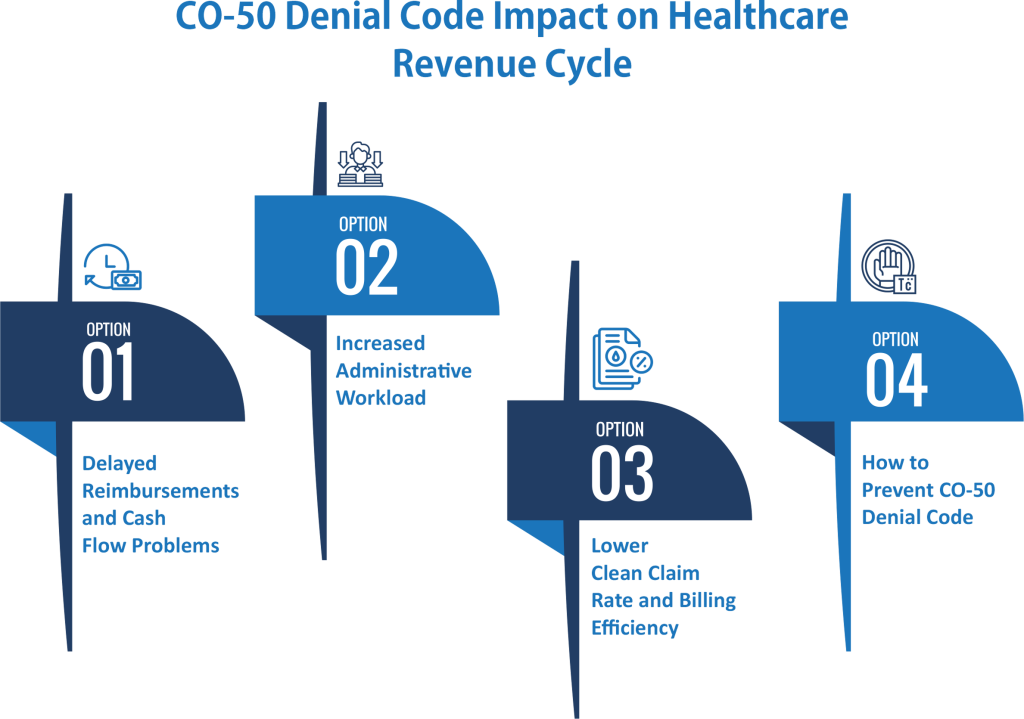
CO-50 Denial Code directly affects reimbursement speed, operational workload, and financial stability within healthcare organizations. Frequent denials increase claim rework, delay payments, and reduce overall revenue cycle performance.
Delayed Reimbursements and Cash Flow Problems
Claims denied under CO-50 often remain unpaid until corrections or appeals are completed. Prolonged unpaid claims also increase dependency on medical A/R services to monitor outstanding balances and follow up on delayed reimbursements.This increases accounts receivable days and slows cash flow for healthcare providers, hospitals, and specialty clinics.
In 2026, denial-related delays continue to affect provider revenue due to stricter payer review systems and growing medical necessity audits. Repeated delays may also interrupt budgeting and operational planning.
Increased Administrative Workload
Each denied claim requires additional review, coding correction, documentation updates, and payer communication. Billing teams spend more time handling resubmissions instead of processing new claims.
Administrative burden may include:
- Claim investigation
- Appeal preparation
- Medical record collection
- Coding review
- Follow up with insurance payers
Lower Clean Claim Rate and Billing Efficiency
Frequent CO-50 denials reduce clean claim performance and create repeated billing cycles. Claims that fail medical necessity review are less likely to process successfully on first submission.
Poor denial management may lead to:
1. Higher denial rates
2. Increased claim aging
3. More manual corrections
4. Reduced reimbursement accuracy
How to Prevent CO-50 Denial Code
Preventing CO-50 Denial Code starts with accurate documentation, correct coding, and payer policy verification before claim submission. Strong front-end and back-end billing controls help reduce medical necessity denials and improve clean claim rates.
Improve Clinical Documentation Quality
Medical records should clearly explain the patient’s condition, treatment plan, and reason for the billed service. Incomplete or unclear documentation increases the risk of medical necessity denial during payer review.
Providers should document:
- Symptoms and diagnosis
- Treatment history
- Physician assessment
- Diagnostic findings
- Medical justification for services
Verify Insurance Coverage and Authorization Requirements
Billing teams should confirm patient eligibility, benefit coverage, and authorization requirements before services are provided. Many CO-50 denials occur because services fall outside payer policy guidelines.
Verification should include:
1. Active insurance coverage
2. Prior authorization status
3. Covered procedure limitations
4. Medical necessity policy checks
Ensure Accurate ICD-10, CPT, and HCPCS Coding
Diagnosis and procedure codes must fully support each other on the claim form. Incorrect code pairing remains one of the most common causes of CO-50 Denial Code in medical billing.
Routine coding reviews help identify:
- Invalid diagnosis linkage
- Missing modifiers
- Incomplete coding
- Outdated code usage
Conduct Regular Billing Audits and Staff Training
Internal audits help identify recurring denial trends and documentation gaps before claims are submitted. Ongoing training also keeps billing teams updated on payer policies, coding changes, and compliance standards. Consistent review processes improve billing accuracy and reduce denial frequency over time.
Conclusion
CO-50 Denial Code remains a major challenge in medical billing due to medical necessity requirements and payer-specific documentation rules. It directly impacts claim approval, reimbursement timelines, and revenue cycle performance across healthcare settings.
Effective management depends on accurate clinical documentation, correct coding practices, and strict adherence to payer guidelines. A consistent review, correction, and prevention process helps reduce denials and improve overall billing efficiency and financial stability.
FAQs
What is the CO-50 Denial Code in medical billing?
CO-50 Denial Code is issued when the insurance payer determines that the billed service does not meet medical necessity criteria. It usually results from incomplete documentation, coding mismatch, or policy restrictions.
Why do insurance companies apply the CO-50 Denial Code?
Insurance companies apply CO-50 when clinical documentation does not justify the need for the service. It is also triggered by incorrect ICD-10 and CPT pairing, missing prior authorization, or non-covered services under the patient’s plan.
How can healthcare providers fix CO-50 Denial Code claims?
Providers can resolve CO-50 denials by evaluating the EOB, correcting coding mistakes, enhancing medical documentation, attaching supporting documents, and resubmitting or appealing the claim as needed.
What documentation is required to prevent the CO-50 Denial Code?
Physician notes, patient history, diagnostic results, treatment plans, and strong medical reasoning that supports the billed service in keeping with payer criteria are all required documentation.
How does the CO-50 Denial Code affect revenue cycle performance?
CO-50 denials delay reimbursements, increase claim rework, and raise administrative workload. If frequent, they reduce clean claim rates and negatively impact overall revenue cycle efficiency.