Why do many healthcare providers face delays in insurer enrollment and reimbursement approval, even after submitting credentialing documents? In many cases, the issue originates from missing or outdated provider information in CAQH systems. According to CAQH, more than 2.5 million medical providers will retain professional data through the CAQH Provider Data Portal in 2026, with over 1,000 health plans and healthcare organizations using the system for credentialing and provider verification processes.
Understanding CAQH Credentialing is critical for healthcare providers, billing specialists, credentialing coordinators, and administrators. CAQH streamlines paperwork by allowing clinicians to submit professional information once and share it with numerous insurance payers. CAQH systems are now used in all 50 states, and almost 80% of US physicians rely on them for credentialing data management and payer access.
This guide discusses CAQH certification. It also highlights its role in provider enrollment, CAQH profile setup, attestation requirements, and re-attestation cycles.
What is CAQH Credentialing in Healthcare?
What is CAQH Credentialing, and why is it important in provider enrollment and insurance credentialing? This section explains how CAQH supports payer verification, healthcare provider enrollment, and provider data management across insurance networks.
CAQH Credentialing
CAQH credentialing is the process of collecting, verifying, and sharing provider information through the CAQH ProView system. Insurance companies use this data during provider credentialing and payer credentialing reviews. The process helps validate licenses, education, work history, and malpractice coverage.
Healthcare providers complete a CAQH profile so multiple payers can access the same credentialing information. This reduces the need for repeated paperwork during insurance credentialing and healthcare provider enrollment. CAQH also supports faster provider verification and profile review workflows.
CAQH ProView Overview
CAQH ProView is an online provider data portal used for CAQH application management and credentialing record updates. Providers use the system to upload licenses, certifications, liability insurance, and practice details. Insurance payers access this information during credentialing reviews.
The platform also manages CAQH attestation and CAQH re-attestation requirements. Providers must review and confirm the accuracy of their profiles every 120 days to maintain active status. An inactive CAQH profile can delay provider enrollment and payer approval processes.
Why CAQH Exists in Healthcare Systems
Before CAQH ProView, providers repeatedly submitted the same credentialing documents to different insurance companies. This caused delays in provider credentialing, inconsistent records, and longer payer review cycles. CAQH was introduced to standardize provider data collection across healthcare organizations.
Today, CAQH supports healthcare provider enrollment by creating one centralized provider profile accessible to participating payers. The system improves provider data accuracy and reduces duplicate administrative work for billing teams, credentialing specialists, and healthcare organizations.
How CAQH Credentialing Works in Healthcare Enrollment
What is CAQH Credentialing, and how does it support healthcare provider enrollment with insurance companies? This section explains the CAQH workflow, payer access process, and the connection between provider credentialing and enrollment approvals.
Step-by-Step CAQH Credentialing Process
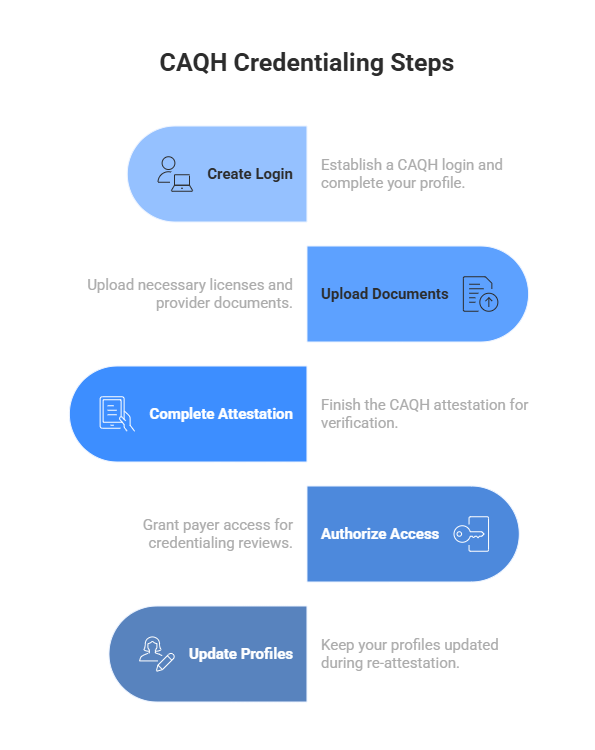
The CAQH credentialing process starts when a provider creates a CAQH login and completes a CAQH application through CAQH ProView. Providers enter personal details, education history, work history, malpractice coverage, and licensing information. Supporting documents are then uploaded for payer review.
Providers must complete CAQH re-attestation every 120 days to keep profiles active.
- Create a CAQH login and CAQH profile
- Upload licenses and provider documents
- Complete CAQH attestation for verification
- Authorize payer access for credentialing reviews
- Update profiles during CAQH re-attestation cycles
Role of CAQH in Insurance Credentialing
CAQH acts as a centralized provider data source for insurance credentialing and payer credentialing workflows. Insurance companies use CAQH ProView to review provider qualifications, verify credentials, and confirm compliance information.
Billing teams, credentialing specialists, and healthcare administrators use CAQH profiles to support provider enrollment and reduce delays in payer approval workflows.
- Supports provider credentialing reviews
- Reduces repeated paperwork submissions
- Improves provider data consistency
- Assists with payer credentialing verification
- Helps reduce enrollment processing delays
Difference Between Credentialing and Enrollment
Provider credentialing is the process of verifying a healthcare provider’s qualifications, licenses, certifications, and professional history. Insurance credentialing reviews are completed before a payer approves participation in its provider network. CAQH supports this verification process through centralized provider records.
Healthcare provider enrollment begins after credentialing approval and allows providers to bill insurance payers for covered services. Enrollment includes payer contracts, participation setup, and reimbursement activation.
- Credentialing verifies provider qualifications.
- Enrollment activates payer participation.
- Credentialing occurs before billing approval.
- Enrollment allows insurance claim submission.
- CAQH supports both workflow stages
CAQH Profile Setup and Application Process
What is CAQH Credentialing, and how do providers complete the CAQH profile for insurance credentialing and payer enrollment? This section explains the CAQH application process, required inputs, and common setup issues that affect healthcare provider enrollment timelines.
How to Complete CAQH Profile
Completing a CAQH profile starts with creating a CAQH login and entering accurate provider data in CAQH ProView. The profile is used in provider credentialing and insurance credentialing workflows for payer review.
- Create a CAQH login and access CAQH ProView
- Enter personal, contact, and practice details
- Add education, training, and work history
- Upload license and malpractice insurance records
- Submit CAQH attestation for payer access
Required Documents for CAQH Application
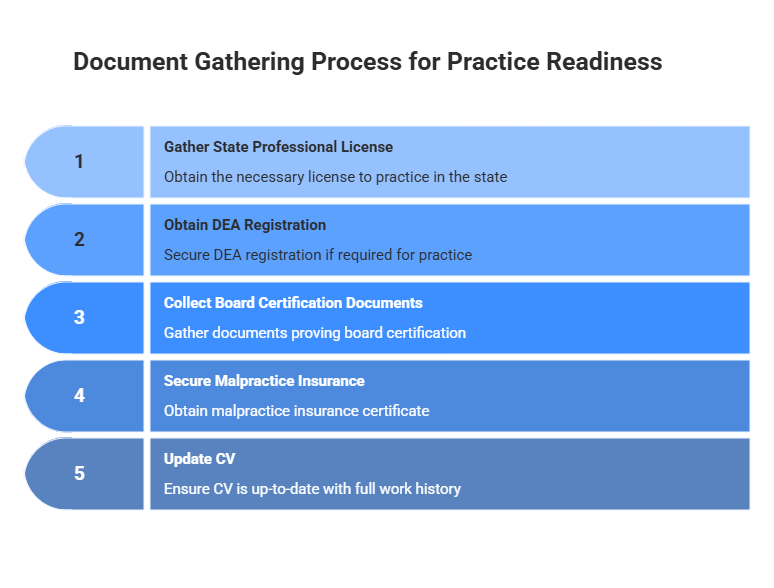
The CAQH application requires verified documents that confirm provider identity, qualifications, and compliance status. These documents are checked during payer credentialing and healthcare provider enrollment processes. Missing or mismatched documents can delay approval.
- State professional license
- DEA registration (if applicable)
- Board certification documents
- Malpractice insurance certificate
- Updated CV with full work history
Common CAQH Profile Errors
CAQH profile errors often slow down insurance credentialing and payer enrollment approval cycles. These issues usually come from missing data, outdated records, or inconsistent entries in the CAQH profile.
- Missing or incomplete work history entries
- Expired license or certification records
- Mismatch in NPI or tax identification details
- Incomplete CAQH attestation submission
- Outdated malpractice insurance information
CAQH Attestation and CAQH Re-attestation Process
What is CAQH Credentialing, and why do attestation cycles matter in provider enrollment and insurance credentialing? This section explains CAQH attestation, re-attestation rules, and the operational impact on healthcare provider enrollment and payer access.
What is CAQH Attestation
CAQH attestation is the process by which providers confirm that all information in their CAQH profile is accurate and current. It is a required step in CAQH ProView used in provider credentialing and insurance credentialing workflows. Without attestation, payers cannot rely on the profile for enrollment decisions.
- Provider confirms accuracy of CAQH profile data
- Required before payer credentialing review
- Completed through the CAQH ProView portal
- Validates licenses, work history, and insurance details
- Enables insurance payer access to provider data
CAQH Re-attestation Requirements
CAQH re-attestation is required every 120 days to keep the provider profile active and valid for payer credentialing use. Providers must review all profile sections and confirm that no changes are needed before submitting re-attestation.
- Required every 120 days by the CAQH system
- Provider reviews and updates the CAQH profile
- Confirms the ongoing accuracy of credentialing data
- Maintains an active status for insurance credentialing
- Supports uninterrupted payer access and enrollment
Impact of Missing Re-attestation
Missing CAQH re-attestation can lead to inactive profile status, which directly affects insurance credentialing and provider enrollment processes. Payers may pause or reject credentialing reviews until the profile is updated and re-attested.
- The CAQH profile becomes inactive or suspended
- Delays in payer credentialing approvals
- Interruptions in healthcare provider enrollment
- Slower insurance claim processing and payments
- Increased administrative workload for corrections and updates
Provider Credentialing and Insurance Credentialing Using CAQH
What is CAQH Credentialing, and how does it support provider credentialing and insurance credentialing workflows in healthcare systems? This section describes how insurers use CAQH data, how credentialing decisions are made, and how provider registration depends on verified CAQH profiles.
How Payers Use CAQH Data
Insurance payers use CAQH data as a centralized source for verifying provider qualifications during credentialing reviews. The CAQH profile includes licenses, work history, malpractice coverage, and education details used in insurance credentialing decisions. This decreases the number of document demands from multiple payers.
CAQH supports faster and more consistent payer credentialing workflows across healthcare organizations. It allows insurance companies to standardize provider data review before approving healthcare provider enrollment. This improves accuracy in provider verification and reduces manual review workload.
CAQH in Payer Credentialing Workflow
CAQH plays a central role in payer credentialing workflows by providing verified provider data in a single platform. Insurance companies access CAQH ProView during credentialing reviews to confirm provider eligibility. This system supports consistent evaluation across multiple insurance networks.
The CAQH profile helps streamline healthcare provider enrollment by reducing delays in document validation and review processes. Credentialing teams rely on CAQH attestation status to confirm data accuracy before approving payer participation. This improves coordination between providers and insurance organizations.
CAQH Login and Access for Providers
Providers use the CAQH login to access and manage their CAQH profile through the CAQH ProView system. This secure portal allows updates to professional data, document uploads, and attestation submissions required for insurance credentialing. It is a key part of provider enrollment workflows.
Through the CAQH login, providers can maintain accurate records needed for payer credentialing and healthcare provider enrollment. Regular access ensures timely updates, preventing delays caused by outdated information. Credentialing teams also rely on this access for ongoing profile monitoring.
Conclusion
CAQH credentialing plays a central role in provider credentialing, insurance credentialing, and healthcare provider enrollment. It standardizes provider data through CAQH ProView and supports payer verification across multiple insurance networks. Accurate profiles reduce delays in approvals and billing workflows.
Maintaining updated CAQH profiles, completing attestation on time, and avoiding common errors help prevent enrollment disruptions. A structured approach to CAQH management improves data accuracy, payer access, and overall revenue cycle performance for healthcare organizations.
FAQs
What is CAQH Credentialing in healthcare?
CAQH credentialing is the process of verifying provider information through CAQH ProView for insurance credentialing and payer enrollment. Insurance companies use this data to review provider qualifications and network eligibility.
How often is CAQH re-attestation required?
CAQH re-attestation is required every 120 days to keep the provider profile active. Providers must review and confirm all profile information before submission.
What documents are required for a CAQH application?
CAQH application documents usually include a state license, DEA certificate, malpractice insurance certificate, and updated work history. Missing records can delay provider enrollment approvals.
What happens if a CAQH profile becomes inactive?
An inactive CAQH profile can delay insurance credentialing and payer enrollment reviews. Providers may also experience reimbursement and claim processing delays.
Is CAQH the same as provider enrollment?
No. CAQH supports provider credentialing by storing provider data, while provider enrollment allows participation in insurance payer networks.