When users search for “what is the CO-197 Denial Code and how to fix it in medical billing”, they are usually dealing with a rejected insurance claim linked to missing prior authorization or precertification. This remains one of the most common denial types in U.S. healthcare billing, especially in services that require payer approval before treatment.
In 2026, prior authorization-related issues will remain a major challenge for the revenue cycle. Industry research and healthcare RCM trend reports show that authorization-related denials still account for a significant portion of claim delays across outpatient and specialty services. Despite improvements in electronic prior authorization systems, gaps in payer-specific requirements and submission timing continue to cause avoidable claim rejections.
This blog explains the CO-197 denial in a structured way. It covers causes, resolution steps, and prevention methods so billing teams, coders, and healthcare providers can reduce repeat denials and improve claim acceptance rates.
What is the CO-197 Denial Code in Medical Billing?
CO-197 Denial Code in Medical Billing refers to a claim rejection caused by missing prior authorization, precertification, or required payer notification. It is one of the most common authorization-related denial codes in healthcare billing workflows.
This section explains the core meaning of the CO-197 Denial Code and how it affects claim payment decisions across insurance systems.
Definition and Meaning in Claims Processing
CO-197 Denial Code is a contractual adjustment code used by payers to show that required authorization was missing before the service was performed. It indicates that the payer did not receive approval, certification, or notification before claim submission.
CO stands for contractual obligation, and 197 refers to missing prior authorization or certification requirements. In claims processing, the service may be medically appropriate, but payment is denied due to administrative non-compliance with payer rules.
Key points:
- CO indicates a contractual obligation between the payer and the provider
- 197 represents a missing prior authorization or certification requirement
- Denial occurs before payment due to a lack of payer approval
- Medical necessity may still be valid, but documentation is incomplete
- Claim is adjusted based on payer policy and billing contract rules
Where CO-197 Appears in EOB and ERA
CO-197 Denial Code appears in both Explanation of Benefits (EOB) and Electronic Remittance Advice (ERA) documents issued by insurance payers.
In EOB:
1. Listed under adjustment codes
2. Often paired with remarks like N290 or MA120
3. Shows “authorization not obtained” message
In ERA:
1. Reported in standardized ANSI code format
2. Used in electronic claim processing systems
3. Indicates denial at the payer adjudication stage
Common display pattern:
- CO-197 (Primary denial code)
- Supporting remark code (reason detail)
- Adjustment amount reflecting non-payment
CO-197 Denial Code Causes in Healthcare Billing
CO-197 Denial Code in healthcare billing arises when payer permission rules are not followed before claim submission. It is usually linked with workflow gaps in front-end verification and authorization processing.
This section explains the main operational and documentation issues that trigger the CO-197 Denial Code in real billing environments.
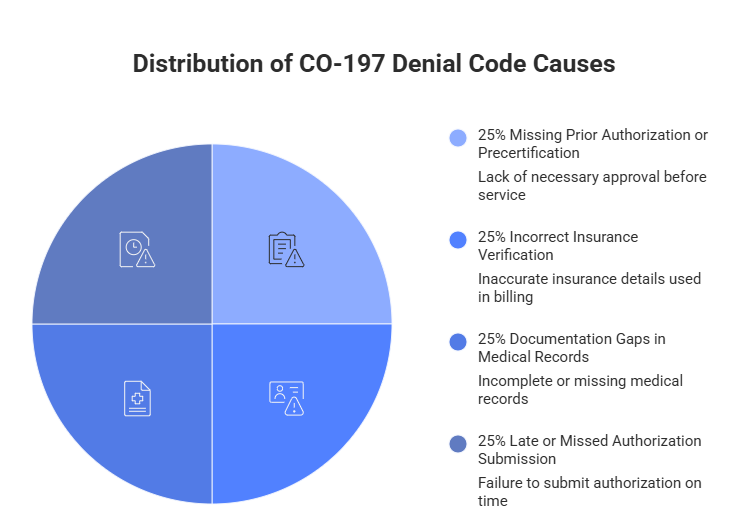
Missing Prior Authorization or Precertification
This cause occurs when a required payer approval is not obtained before the service is performed. Many procedures, such as imaging, surgery, and specialty care, require prior authorization.
When this step is skipped, the claim is denied under CO-197. This reflects a breakdown in scheduling and insurance verification processes.
Key points:
1. Service performed without payer approval
2. The authorization requirement was not checked before scheduling
3. High-risk services include imaging and outpatient procedures
Incorrect Insurance Verification
Incorrect verification happens when eligibility is checked, but authorization rules are not reviewed correctly. This leads to false assumptions about coverage approval.
The result is claim denial even when the patient has active insurance. This issue is common in high-volume billing environments.
Key points:
1. Eligibility checked, but authorization rules missed
2. Payer-specific requirements not identified
3. Leads to avoidable CO-197 Denial Code
Documentation Gaps in Medical Records
Documentation gaps occur when clinical records do not support payer authorization requirements. Missing physician notes or incomplete justification can trigger denial.
Payers rely on documentation to validate medical necessity before approval. Incomplete records weaken claim approval status.
Key points:
1. Missing or incomplete clinical notes
2. Weak medical necessity justification
3. Inconsistent supporting documentation
Late or Missed Authorization Submission
Late submission occurs when authorization is requested after the service date. Most payers reject such claims unless emergency conditions apply.
Failure to meet deadlines results in the CO-197 Denial Code and a payment delay. This indicates a failure to keep track of authorization deadlines.
Key points:
1. Authorization requested after service delivery
2. Payer time limits are not followed
3. Leads to automatic claim denial under CO-197
How CO-197 Denial Code Impacts Revenue Cycle
CO-197 Denial Code affects the revenue cycle by interfering with claim reimbursement due to missing authorization requirements. It creates late payments and increases the administrative workload for the billing staff.
This section explains how the CO-197 Denial Code impacts financial performance, operational efficiency, and claim approval rates in healthcare organizations.
Financial Impact on Healthcare Providers
CO-197 Denial Code leads to direct revenue loss when services are denied due to missing authorization. Providers may be unable to bill payers and may face write-offs depending on contract terms.
It also increases accounts receivable days and reduces cash flow stability. Repeated denials create financial pressure on practice operations.
Key points:
1. Loss of reimbursement for rendered services
2. Increase in write-offs and bad debt risk
3. Higher accounts receivable aging
Operational Burden on Billing Teams
CO-197 Denial Code increases workload for billing and revenue cycle staff. Teams must review claims, verify authorization status, and submit corrections or appeals.
This process consumes time and reduces focus on new claim submissions. It also increases dependency on manual follow-ups with payers.
Key points:
1. More denial follow-up and resubmission tasks
2. Increased workload for billing staff
3. Time loss in the claims correction process
Effect on Claim Approval Rate
CO-197 Denial Code reduces first-pass claim acceptance rates. Claims without proper authorization are rejected before payment processing.
This lowers clean claim ratios and affects overall billing performance metrics. It also signals workflow gaps in front-end verification.
Key points:
1. Lower first-pass acceptance rate
2. Reduced clean claim percentage
3. Indicates gaps in authorization workflow checks
CO-197 Denial Code Resolution Steps
CO-197 Denial Code resolution requires a structured review of payer rules, documentation, and authorization records before claim correction. The goal is to identify where the authorization breakdown occurred and correct it before resubmission.
Review EOB and Denial Details
Start by reviewing the Explanation of Benefits (EOB) or ERA file for CO-197 remarks. Check supporting codes such as N290 or MA120 for additional clarification.
This helps confirm whether the denial is due to missing authorization, late submission, or documentation failure.
Key points:
- Check the CO-197 denial reason in EOB/ERA
- Identify supporting remark codes
- Confirm missing authorization type
Collect Required Clinical Documentation
Gather all relevant clinical records before contacting the payer. This includes physician orders, progress notes, and medical necessity justification.
Complete documentation strengthens appeal or reconsideration requests.
Key points:
- Physician orders and clinical notes
- Proof of medical necessity
- Treatment history and diagnostic reports
Contact Payer for Clarification
Reach out to the insurance payer to confirm denial details. Ask whether retro authorization or reconsideration is allowed under policy terms.
Clear communication helps identify correction options early.
Key points:
- Confirm the denial reason with the payer
- Check retro authorization eligibility
- Record reference numbers for tracking
Submit Appeal with Supporting Evidence
Prepare and submit a formal appeal with complete documentation. Ensure all required forms and supporting records are attached.
Follow payer timelines strictly to avoid automatic rejection.
Key points:
- Include complete clinical documentation
- Submit within the payer-defined timeframe
- Track appeal status after submission
CO-197 Denial Code Prevention Strategies
CO-197 Denial Code prevention depends on strong front-end verification, payer-specific awareness, and consistent authorization tracking before services are delivered. Most denials are due to workflow defects rather than clinical concerns.
Insurance Verification Before Scheduling
Insurance verification must include both eligibility and authorization requirements. Many CO-197 denials occur when authorization rules are not identified before the appointment is scheduled.
Proper verification reduces avoidable claim rejections and improves billing accuracy.
Key points:
1. Check payer authorization rules during eligibility verification
2. Confirm service-specific approval requirements
3. Record verification details before scheduling
Pre-Authorization Tracking System
A structured tracking system helps monitor authorization status from request to approval. Missing follow-ups are a common reason for the CO-197 Denial Code.
Tracking ensures no request is left incomplete or expired.
Key points:
1. Maintain authorization logs for all patients
2. Track submission and approval timelines
3. Set alerts for pending authorizations
Staff Training on Payer Rules
Staff must understand payer-specific authorization rules for different services. Lack of training leads to repeated authorization errors and claim denials.
Regular updates help reduce avoidable billing mistakes.
Key points:
1. Train staff on payer-specific requirements
2. Update teams on policy changes regularly
3. Assign clear authorization responsibilities
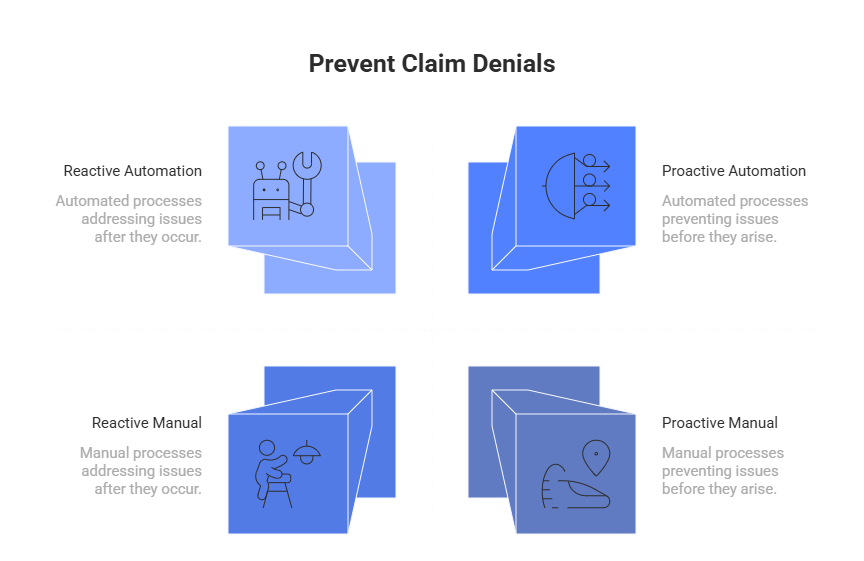
Use of RCM Tools and Alerts
When submitting a claim, revenue cycle management solutions can help detect authorization errors. These technologies reduce manual errors while increasing billing efficiency.
Automated alerts support timely action on pending authorizations.
Key points:
1. Use RCM systems for authorization tracking
2. Enable alerts for missing approvals
3. Flag high-risk claims before submission
Conclusion
CO-197 Denial Code is a frequent challenge in medical billing due to missing or delayed prior authorization, precertification, or payer notification. It affects reimbursement, claim timelines, and overall revenue cycle performance across healthcare settings.
Reducing the CO-197 Denial Code requires strict insurance verification, timely authorization handling, and accurate documentation practices. When billing teams apply consistent workflows and monitor payer rules, denial rates decrease and claim acceptance improves steadily.
FAQs
What does the CO-197 Denial Code mean in medical billing?
CO-197 Denial Code means the claim was denied because prior authorization, precertification, or required payer notification was not obtained before the service was provided. It is a contractual adjustment, so the payer does not pay for the service, even if it is medically necessary.
What are the main reasons for the CO-197 Denial Code?
The most common reasons include missing prior authorization, incorrect insurance verification, incomplete clinical documentation, and late submission of authorization requests.
Can the CO-197 Denial Code be appealed?
Yes, CO-197 denials can sometimes be appealed if supporting documentation shows medical necessity or if payer policy allows retro authorization. However, approval depends entirely on the insurance company’s rules and timelines.
How can healthcare providers prevent the CO-197 Denial Code?
Providers can prevent CO-197 denials by verifying insurance authorization requirements before scheduling, maintaining proper documentation, tracking authorizations, and training staff on payer-specific rules. Using RCM tools also helps reduce manual errors.
Does the CO-197 Denial Code affect revenue cycle performance?
Yes, CO-197 Denial Code directly affects revenue cycle performance by reducing clean claim rates and delaying reimbursements. It increases administrative workload and can lead to write-offs if not corrected or appealed in time.