
Choosing the right Medicare coverage can feel overwhelming, especially when every option sounds similar but works very differently. The truth is, picking the wrong combination could leave you paying more than expected or missing out on essential care. That is why understanding how each part works is so important before making any decision.
In simple terms, Medicare is divided into four parts, each covering a different area of healthcare, from hospital stays to doctor visits and prescription drugs. Once you clearly understand what Parts A, B, C, and D actually do, you gain the confidence to choose a plan that fits your health needs, your lifestyle, and your budget without second-guessing.
What Is Medicare and Who Is Eligible?
Medicare is a federal health insurance program designed primarily for people aged 65 and older, but it also supports younger individuals with certain disabilities and specific medical conditions. Understanding eligibility is the first step toward making the right coverage decisions.
You are generally eligible for Medicare if you fall into one of these categories:
- You are 65 or older and a U.S. citizen or permanent resident
- You are under 65 and have a qualifying disability
- You have conditions such as End-Stage Renal Disease or ALS
In many cases, enrollment happens automatically if you are already receiving Social Security benefits. However, if you are not, you will need to sign up yourself during your enrollment window to avoid penalties or delays in coverage.
Knowing when and how you qualify matters because missing your enrollment period can lead to higher costs later. Taking a proactive approach here ensures you get the coverage you need without unnecessary financial surprises.
Overview of Medicare Parts A, B, C, and D
Medicare is divided into four distinct parts, each covering a different aspect of your healthcare. While this structure may seem complicated at first, it becomes much clearer once you understand the role each part plays.
At its core:
- Part A focuses on hospital-related care
- Part B covers medical services like doctor visits and outpatient care
- Part C, also known as Medicare Advantage, combines coverage through private insurance plans
- Part D provides prescription drug coverage
The foundation of Medicare is known as Original Medicare, which includes Parts A and B. This option gives you flexibility in choosing healthcare providers but does not include prescription drug coverage or certain additional benefits.
On the other hand, Medicare Advantage (Part C) offers an all-in-one alternative. These plans are provided by private insurers and often bundle hospital, medical, and drug coverage together, sometimes with extra benefits like dental or vision care.
Understanding how these parts connect is key to making a confident decision. Instead of viewing them as separate pieces, think of them as building blocks that you can combine based on your healthcare needs and budget.
1. Medicare Part A (Hospital Insurance)
Medicare Part A is often considered the foundation of your coverage because it focuses on hospital-related care. For many people, this is the first layer of financial protection against high medical costs during serious health events.
What Does Part A Cover?
Part A primarily helps pay for care when you are admitted to a medical facility. This includes:
- Inpatient hospital stays
- Skilled nursing facility care after a hospital stay
- Hospice care for terminal illness
- Limited home health care services
This coverage can significantly reduce the financial burden of major medical situations, which is why most eligible individuals enroll in Part A as soon as they qualify.
What Does Part A Cost?
One of the biggest advantages of Part A is that many people qualify for premium-free coverage if they have worked and paid Medicare taxes for at least 10 years.
However, it is not completely free. You may still have:
- Deductibles per benefit period
- Coinsurance for extended hospital stays
Understanding these costs upfront helps you avoid surprises during longer or more complex treatments.
Who Should Enroll in Part A?
In most cases, enrolling in Part A is a straightforward decision. If you are eligible, it makes sense to take it because it provides essential coverage with minimal cost for many people.
2. Medicare Part B (Medical Insurance)
While Part A covers hospital care, Medicare Part B handles your everyday healthcare needs. This is the part that keeps you covered for routine medical services and preventive care.
What Does Part B Cover?
Part B focuses on outpatient and medical services, including:
- Doctor visits and specialist consultations
- Preventive services like screenings and vaccines
- Outpatient procedures
- Durable medical equipment such as wheelchairs or oxygen
This coverage plays a critical role in maintaining your health and catching issues early before they become serious.
What Does Part B Cost?
Unlike Part A, Part B typically requires a monthly premium. In addition, you will usually pay:
- An annual deductible
- Around 20 percent coinsurance for most services
These out-of-pocket costs can add up over time, which is why many people explore additional coverage options later.
Key Limitation You Should Know
One important detail that many people overlook is that Part B does not have a cap on out-of-pocket expenses. This means your costs can continue to rise if you need frequent care.
Who Should Enroll in Part B?
If you want coverage for routine medical care and doctor visits, Part B is essential. Skipping it without having other credible coverage can lead to penalties and gaps in care, which can be costly in the long run.
3. Medicare Part C (Medicare Advantage)
Medicare Part C, also known as Medicare Advantage, is where things shift from government-managed coverage to private insurance options. Instead of using Original Medicare separately, Part C bundles your coverage into a single plan.
What Is Medicare Advantage?
Medicare Advantage plans are offered by private insurance companies approved by Medicare. These plans are designed to replace Original Medicare while still providing the same core benefits.
In simple terms, instead of managing multiple parts, you get everything in one plan.
What Does Part C Include?
Most Medicare Advantage plans combine:
- Part A (hospital coverage)
- Part B (medical coverage)
- Often Part D (prescription drug coverage)
Many plans also include extra benefits that Original Medicare does not cover, such as:
- Dental care
- Vision services
- Hearing coverage
- Wellness programs
This bundled approach makes Part C appealing for those who want simplicity and additional perks.
Pros and Cons of Part C
Advantages:
- All-in-one coverage for convenience
- Often includes extra benefits
- May offer lower upfront monthly costs
Limitations:
- Network restrictions (you may need to use specific doctors)
- Referrals may be required for specialists
- Coverage can vary by location and provider
Who Should Consider Part C?
If you prefer a streamlined plan with predictable structure and extra benefits, Medicare Advantage can be a strong option. However, it is important to check provider networks and coverage details to ensure it fits your needs.
4. Medicare Part D (Prescription Drug Coverage)
Prescription medications can be one of the biggest ongoing healthcare expenses, and that is exactly where Medicare Part D comes in. It helps reduce the cost of the medications you rely on.
What Does Part D Cover?
Part D plans cover a wide range of prescription drugs, including:
- Brand-name medications
- Generic drugs
- Specialty medications (depending on the plan)
Each plan has its own list of covered drugs, known as a formulary, so it is important to confirm that your medications are included.
What Does Part D Cost?
Costs for Part D can vary depending on the plan you choose, but typically include:
- A monthly premium
- An annual deductible
- Copayments or coinsurance for prescriptions
There is also a limit on how much you will spend out of pocket each year, which provides financial protection for those with high medication needs.
Why Part D Is So Important
One of the biggest mistakes people make is delaying enrollment in Part D because they do not currently take medications. This can lead to:
- Late enrollment penalties
- Higher costs later
- Limited access when medications become necessary
Who Should Enroll in Part D?
Even if you are healthy now, having drug coverage is a smart move. It protects you from unexpected prescription costs and ensures you are covered when your needs change.
Medicare Parts A vs B vs C vs D (Simple Comparison)
Understanding each part individually is helpful, but comparing them side by side makes decision-making much easier.
| Feature | Part A | Part B | Part C | Part D |
| Coverage | Hospital care | Medical services | All-in-one private plan | Prescription drugs |
| Provider | Government | Government | Private insurers | Private insurers |
| Includes Drugs | No | No | Often included | Yes |
| Flexibility | High | High | Limited network | Depends on plan |
| Extra Benefits | No | No | Yes (dental, vision, etc.) | No |
Parts A and B form the base, while Parts C and D enhance or replace that coverage depending on your needs.
What Medicare Does Not Cover
One of the biggest gaps in understanding Medicare is assuming it covers everything. It does not.
Here are some important services that are typically not covered:
- Routine dental care
- Vision exams and glasses
- Hearing aids
- Long-term care (like nursing homes)
- Most cosmetic procedures
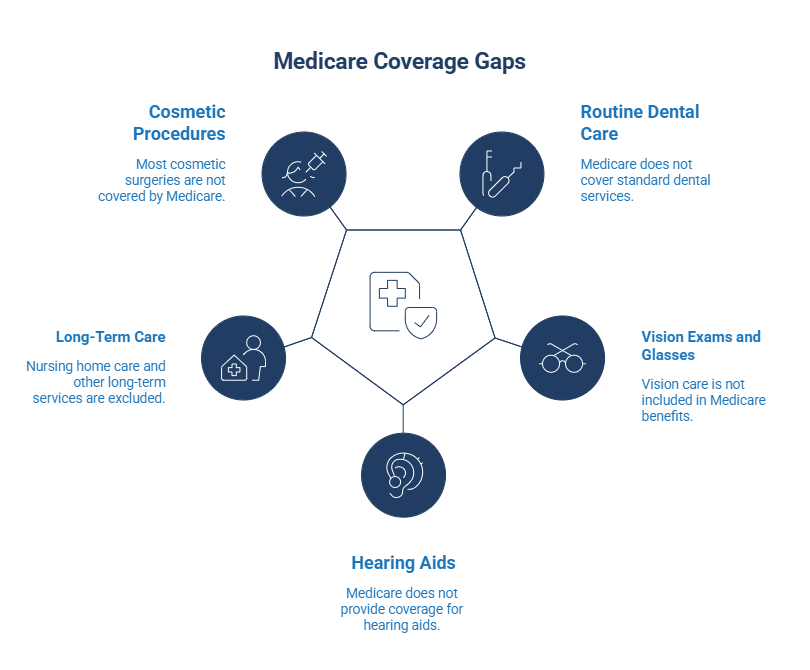
This is exactly why many people look into additional coverage options or choose plans that include extra benefits. Knowing these gaps early helps you avoid unexpected out-of-pocket expenses later.
How to Choose the Right Medicare Plan
This is where everything comes together. Instead of guessing, you can follow a simple decision-making approach.
Step-by-Step Decision Framework
- Start with Part A
Most people enroll automatically or qualify for premium-free coverage. - Add Part B if you need routine care
This covers doctor visits and preventive services. - Choose your path:
- Option 1: Original Medicare (A + B) + Part D + optional supplemental coverage
- Option 2: Medicare Advantage (Part C), which bundles everything
- Evaluate your needs:
- Do you want flexibility in choosing doctors?
- Do you take regular medications?
- Do you prefer simplicity or customization?
Real-Life Scenarios
Healthy and low medical needs: Original Medicare with minimal add-ons may work well.
Chronic conditions or frequent care: A plan with better cost control and drug coverage is essential.
Budget-conscious individuals: Plans with bundled benefits and predictable costs may be more appealing.
Enrollment Periods and Penalties
Timing matters more than most people realize. Missing enrollment windows can lead to permanent penalties.
Key Enrollment Periods
- Initial Enrollment Period: When you first become eligible
- General Enrollment Period: If you missed your first chance
- Open Enrollment Period: Allows plan changes each year
Why Penalties Matter
If you delay enrolling in Part B or Part D without qualifying coverage, you may face:
- Higher monthly premiums
- Long-term financial penalties
This is one of the most expensive mistakes people make with Medicare.
Medicare Costs Breakdown
Understanding costs upfront helps you avoid surprises and plan better.
Common Costs Across Medicare
- Monthly premiums
- Deductibles before coverage begins
- Coinsurance or copayments for services
What Impacts Your Costs?
- The type of plan you choose
- Your healthcare usage
- Whether you add supplemental coverage
There is no one-size-fits-all cost. The best plan is the one that aligns with your medical needs and financial situation.
Medicare Advantage vs Original Medicare
This is one of the most important decisions you will make.
Original Medicare
Pros:
- Freedom to choose any doctor who accepts Medicare
- No network restrictions
Cons:
- No built-in drug coverage
- No cap on out-of-pocket spending
Medicare Advantage
Pros:
- Bundled coverage in one plan
- Extra benefits like dental and vision
- Often includes drug coverage
Cons:
- Limited provider networks
- Plan details vary by provider. The right choice depends on whether you value flexibility or convenience more.
Common Medicare Mistakes to Avoid
Avoiding these mistakes can save you money and stress:
- Missing enrollment deadlines
- Not enrolling in drug coverage
- Assuming all services are covered
- Ignoring out-of-pocket costs
- Choosing a plan without checking provider networks
A little planning now prevents major issues later.
Conclusion
Medicare does not have to be confusing once you understand how each part works. Parts A, B, C, and D each serve a specific purpose, and the right combination depends on your personal healthcare needs and financial situation.
The key is to approach your decision with clarity instead of guesswork. When you understand your options, compare costs, and think about your long-term needs, you put yourself in a position to choose coverage that truly works for you.
Take the time to evaluate your situation carefully, because the choices you make today can directly impact your healthcare experience and expenses in the future.
Frequently Asked Questions
Q: Do I need all four parts of Medicare?
Ans: No. Most people need Parts A and B, then choose either Part C or Part D depending on their coverage preference.
Q: Is Medicare free at age 65?
Ans: Part A is often premium-free, but Part B and other parts usually require monthly payments.
Q: What is the best Medicare option?
Ans: There is no single best option. It depends on your health needs, budget, and preferred level of flexibility.
Q: Can I change my Medicare plan later?
Ans: Yes, during annual enrollment periods, you can switch plans or adjust your coverage.
Q: What happens if I do not enroll on time?Ans: You may face late penalties and delayed coverage, which can increase your overall costs.