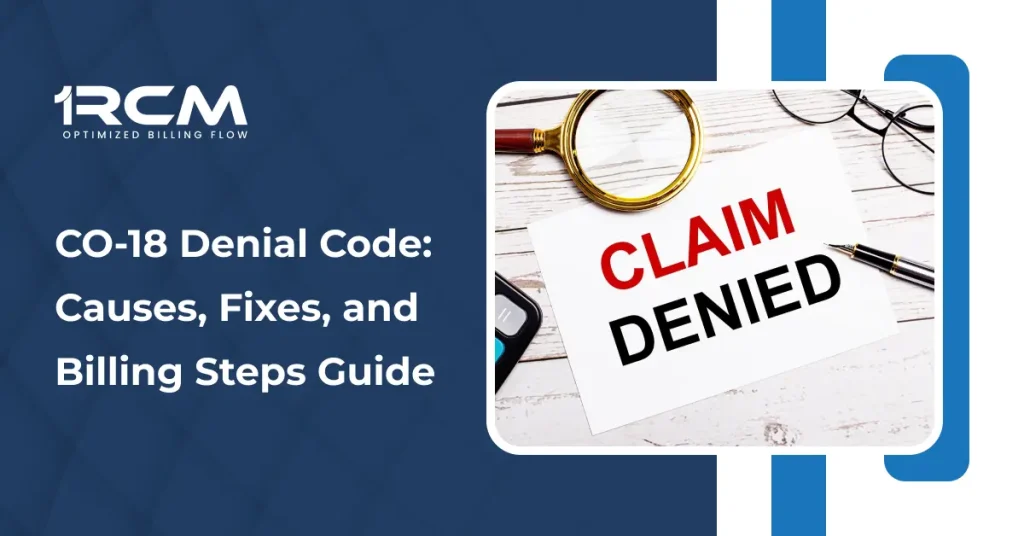
When healthcare providers search “why was my claim denied with CO-18 Denial Code”, they are often faced with a payer’s duplicate claim rejection. CO-18 Denial Code occurs when the same service or claim is submitted many times due to billing or system issues. In 2026, claim denial rates will remain high, with duplicate denials having a key impact. Market studies indicate that total claim denial rates range between 5% to 10%, with some specialties exceeding 11% to 20% depending on payer mix and workflow gaps.
CO-18 Denial Code exerts direct operational pressure on healthcare providers, medical coders, and revenue cycle staff. Each refused claim increases rework time, delays reimbursement, and raises administrative costs. Current industry studies reveal that the cost to rework a refused claim is between $25 and $30 per claim. This creates a significant financial burden at scale.
This guide breaks down the causes, correction methods, and prevention strategies to help healthcare providers and billing teams reduce CO-18 occurrences and improve first-pass claim acceptance rates.
What is the CO-18 Denial Code in Medical Billing?
CO-18 Denial Code refers to a duplicate claim or duplicate service rejection issued by insurance payers. This section explains how duplicate billing is identified in medical claims processing systems.
Definition of Duplicate Claim Under CO-18
A duplicate claim occurs when the same CPT code, service date, and provider details are submitted again.
Payers reject these claims to prevent payment for the same service more than once.
CO-18 Denial Code is applied when the claim data matches an earlier processed record.
This usually happens when a claim is resubmitted without checking the claim status.
It may also occur when corrections are made without voiding the original claim first.
Billing systems may also generate duplicates due to repeated batch submissions.
Healthcare billing teams must ensure claim tracking before resubmission.
Accurate claim status review reduces avoidable duplicate billing errors.
How Payers Identify CO-18 Denials
Payers use automated claim processing systems to detect duplicate submissions.
These systems compare incoming claims against stored historical claim records.
CO-18 Denial Code is triggered when matching claim elements are found.
Key matching fields include patient details, CPT codes, and service dates.
Provider identifiers and billing locations are also checked for duplication.
If all key elements match, the system flags the claim as a duplicate.
Clearinghouses also run pre-adjudication edits before claims reach the payer.
This reduces duplicate submissions and improves claim accuracy in processing workflows.
CO-18 Denial Code Causes in Medical Billing Workflow
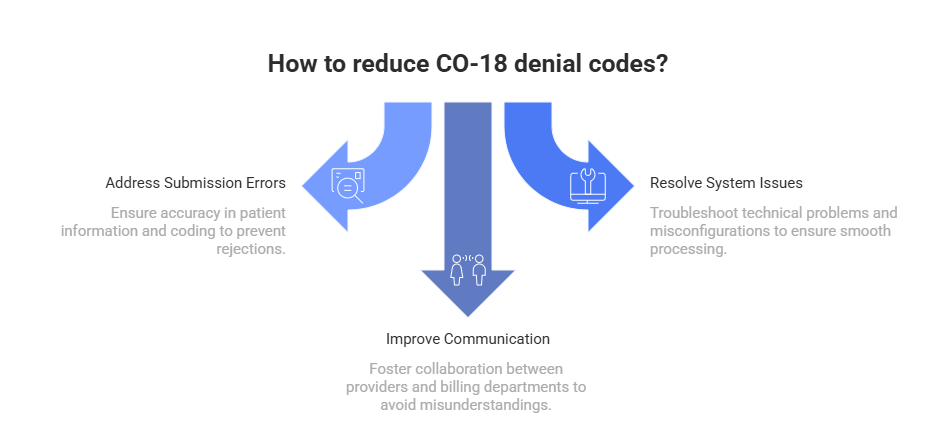
CO-18 Denial Code commonly occurs when duplicate claims enter the billing workflow without proper verification. This section explains the operational, technical, and communication-related causes behind repeated claim submissions. CO-18 Denial Code often reflects billing process issues that affect reimbursement accuracy.
Common Submission Errors
Duplicate claims are often caused by repeated manual claim submission. Billing staff may resend claims without checking payer acknowledgment or claim status reports. This creates matching claim records that trigger the CO-18 Denial Code.
Incorrect correction workflows can also lead to duplicate submissions. Some teams submit a fresh claim rather than following the traditional claim process. In addition, missing frequency codes may cause the payer to treat the claim as a duplicate.
Common submission-related issues include:
1. Rebilling claims without claim status verification
2. Missing corrected claim indicators
3. Repeated manual entry of the same claim
4. Failure to review clearinghouse responses
System and Clearinghouse Triggers
Billing software and clearinghouses can generate duplicate claim activity. System synchronization issues sometimes resend previously transmitted claims automatically. Batch processing errors may also duplicate submission files.
Clearinghouses conduct duplicate detection checks before payer adjudication.
Claims that match the patient, provider, and CPT information appear during validation. This may prevent the claim from reaching the payer system.
Common technical triggers include:
1. EHR synchronization failures
2. Duplicate batch claim transmission
3. Claim scrubber processing errors
4. Delayed claim acknowledgment updates
5. Repeated electronic file submission
Coordination and Communication Gaps
Poor departmental collaboration increases the possibility of duplicate claims. Front office staff, coders, and billing teams may use different claim status records. This results in multiple submissions without confirmation of previous processing.
Communication delays with payers also contribute to the CO-18 Denial Code.
If remittance updates are delayed, billing teams may assume the original claim was not received. This often results in unnecessary rebilling activity.
Common workflow communication gaps include:
1. Lack of centralized claim tracking
2. Delayed payer response review
3. Incomplete internal status updates
4. Limited coordination between billing teams
5. Missing documentation follow-up procedures
CO-18 Denial Code Impact on Revenue Cycle
CO-18 Denial Code directly affects revenue cycle performance by delaying claim reimbursement and increasing operational workload. This section explains how duplicate claim denials create financial and administrative pressure for healthcare organizations.
Payment Delays and Cash Flow Issues
CO-18 Denial Code delays reimbursement because duplicate claims require additional review before payment processing. Payers often suspend or reject these claims until billing records are verified. This creates interruptions in expected revenue flow for healthcare providers.
Repeated denials also increase outstanding accounts receivable balances. Billing teams spend additional time correcting and resubmitting affected claims. Delayed payments may affect operational budgeting and financial planning.
Common financial impacts include:
- Increased accounts receivable days
- Delayed payer reimbursement cycles
- Higher denial rework costs
- Reduced monthly cash flow stability
- Slower payment posting processes
Administrative Workload Increase
Duplicate claim denials increase administrative tasks across billing departments.
Staff must review claim history, payer responses, and submission records before taking corrective action.
Repeated denial handling also reduces staff productivity. Time spent resolving duplicate claims limits focus on new claim submissions and payment follow-up activities. High denial volume may also increase over time and staffing costs.
Common administrative burdens include:
- Manual denial investigation
- Repeated claim status verification
- Increased payer communication tasks
- Additional documentation review
- Corrected claim resubmission work
Claim Processing Inefficiency
CO-18 Denial Code creates inefficiency across the claims processing cycle. Duplicate submissions interrupt clean claim workflows and increase adjudication delays. This affects both billing operations and payer processing systems.
Inefficient claim handling may reduce first-pass claim acceptance rates. Claims that require repeated correction increase processing time and create workflow backlogs. Poor denial management may also affect overall revenue cycle performance metrics.
Common processing inefficiencies include:
- Lower clean claim submission rates
- Increased claim correction cycles
- Delayed adjudication timelines
- Repeated clearinghouse validation failures
- Higher denial tracking workload
How to Fix CO-18 Denial Code
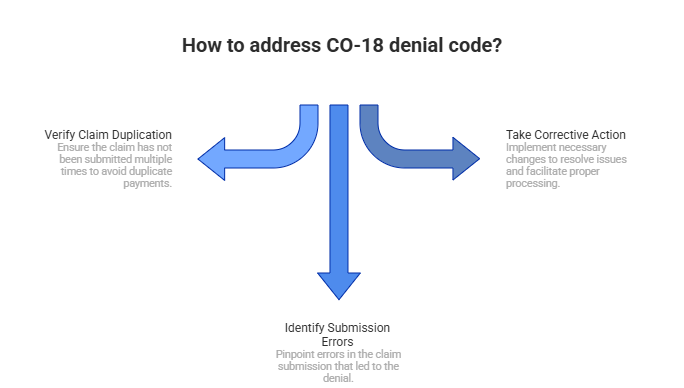
CO-18 Denial Code must be reviewed carefully before any claim correction or resubmission is performed. This section explains the steps healthcare providers and billing teams use to resolve duplicate claim denials.
Verify Claim Duplication
The first step is confirming whether the denied claim is an actual duplicate. Billing teams should compare the denied claim against previously submitted records. To confirm duplication, patient information, CPT codes, and dates of service must all match.
Key verification checks include:
- Patient account number review
- CPT/HCPCS code comparison
- Date of service validation
- Provider and facility matching
- Claim frequency code review
Identify Submission Errors
After duplication is confirmed, billing teams should identify how the duplicate claim occurred.
Submission errors may result from manual rebilling, system duplication, or incorrect correction workflows. Finding the source of the error helps prevent future duplicate denials.
Common submission-related errors include:
- Resubmitting claims without status review
- Missing corrected claim indicators
- Duplicate batch file transmission
- Incorrect claim frequency code usage
- Failure to review payer acknowledgments
Take Corrective Action
Corrective action depends on the reason behind the CO-18 denial. Billing teams may need to void the duplicate claim, submit a corrected claim, or contact the payer for clarification. The action taken should match the payer’s claim processing guidelines.
Common corrective actions include:
- Voiding duplicate claims
- Submitting corrected claims properly
- Updating missing claim frequency codes
- Attaching supporting documentation
- Contacting the payer’s claims department
Conclusion
CO-18 Denial Code remains a common reason for duplicate claim rejections in medical billing operations. Healthcare providers, coders, and revenue cycle teams may face payment delays, higher rework costs, and additional administrative burden when duplicate claims are not identified early. Proper claim tracking, accurate submission review, and timely status verification help reduce avoidable denial activity.
Healthcare organizations should maintain clear communication between billing departments, coders, and front office teams to improve claim accuracy. Regular denial monitoring, correct use of corrected claims, and proper billing workflow controls can reduce CO-18 Denial Code occurrences and support faster reimbursement processing.
FAQs
What does the CO-18 Denial Code mean in medical billing?
CO-18 Denial Code means the insurance payer identified the submitted claim or service as a duplicate. This denial usually occurs when the same claim is submitted more than once without proper correction or claim status verification.
What causes the CO-18 Denial Code?
CO-18 Denial Code is commonly caused by repeated claim submission, missing corrected claim indicators, duplicate batch transmissions, or billing system errors. Delayed payer responses and poor claim tracking may also lead to duplicate billing activity.
How can healthcare providers fix the CO-18 Denial Code?
Healthcare providers can fix the CO-18 Denial Code by reviewing the denied claim against previous submissions to confirm duplication. Billing teams may need to void the duplicate claim, submit a corrected claim, or contact the payer for further clarification.
How do payers identify duplicate claims?
Payers identify duplicate claims using automated claim processing systems that compare patient information, CPT codes, provider details, and dates of service. If the submitted claim matches an earlier processed record, the payer may issue the CO-18 Denial Code.
How can billing teams prevent the CO-18 Denial Code?
Billing teams can prevent CO-18 Denial Code by verifying claim status before resubmission and maintaining accurate claim tracking procedures. Regular staff training, internal audits, and proper use of corrected claim processes also help reduce duplicate claim denials.