Medical billing becomes significantly more complex when a patient receives treatment after a motor vehicle accident. Instead of billing traditional health insurance first, providers often need to submit claims to a no-fault carrier, the insurance company responsible for covering accident-related medical expenses regardless of fault.
Exploring how no-fault carriers work is essential for preventing claim denials, accelerating reimbursements, and maintaining a healthy revenue cycle. Whether you’re a physician, chiropractor, physical therapist, or billing professional, knowing when and how to bill a no-fault carrier can make the difference between timely payments and costly delays.
In this article, we’ll break down the role of no-fault carriers, explain how the billing process works, and highlight the key steps providers can take to maximize reimbursement while staying compliant.
What Is a No-Fault Carrier in Medical Billing?
A no-fault carrier is an insurance company responsible for paying medical expenses related to an accident, regardless of who caused it. In medical billing, healthcare providers submit claims to the patient’s no-fault insurance carrier for treatment resulting from a motor vehicle accident instead of billing traditional health insurance first.
No-fault carriers operate under Personal Injury Protection (PIP) or similar coverage that allows injured individuals to receive prompt medical care without waiting for liability investigations or legal disputes to be resolved. This system helps ensure that patients can access necessary treatment while providers receive reimbursement for their services.
For healthcare organizations, correctly identifying the no-fault carrier is crucial because billing the wrong payer can lead to claim denials, delayed payments, and increased administrative costs.
Example of a No-Fault Carrier in Medical Billing
Imagine a patient visits a medical practice after being injured in a car accident. During registration, the patient provides information about their auto insurance policy, including the claim number and carrier details. Since the injury resulted from an accident, the provider submits the claim to the patient’s no-fault carrier rather than their health insurance company.
The no-fault carrier reviews the claim, verifies coverage, and reimburses eligible medical expenses according to the policy’s benefits and limits.
How Does No-Fault Insurance Work?
No-fault insurance is designed to simplify the claims process after an automobile accident. Instead of determining who caused the accident before medical bills can be paid, each injured person’s insurance policy covers their own accident-related expenses up to the policy limits.
This approach reduces delays in treatment and allows healthcare providers to receive payment more quickly compared to waiting for liability claims to be settled.
A Closer look at Personal Injury Protection (PIP)
Personal Injury Protection, commonly known as PIP, is the coverage component that funds medical treatment under a no-fault insurance system. PIP benefits may cover:
- Emergency medical treatment
- Physician services
- Diagnostic testing
- Physical therapy
- Rehabilitation services
- Prescription medications
- Lost wages in certain cases
- Transportation expenses related to medical care
The specific benefits and coverage limits vary by state and insurance policy.
Why No-Fault Insurance Matters in Medical Billing
For providers, no-fault insurance creates a separate billing pathway that requires additional documentation, verification procedures, and compliance requirements. Understanding these requirements helps practices avoid reimbursement delays and maintain a more efficient revenue cycle through effective medical billing services.
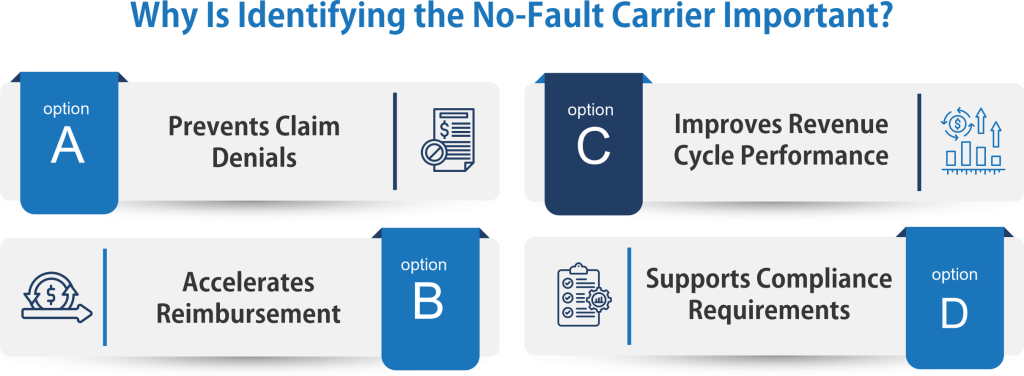
Why Is Identifying the No-Fault Carrier Important?
Accurate payer identification is one of the most important steps in the no-fault billing process. Even minor errors in insurance information can result in denied claims, delayed payments, and unnecessary administrative work.
Prevents Claim Denials
Many no-fault claim denials occur because providers bill the wrong insurance company or fail to identify accident-related coverage during patient intake. Proper verification helps prevent these avoidable errors.
Accelerates Reimbursement
Submitting claims directly to the correct no-fault carrier reduces processing delays and helps providers receive payments faster. This can significantly improve cash flow for practices that frequently treat accident victims.
Improves Revenue Cycle Performance
When billing teams correctly identify no-fault carriers from the beginning, they spend less time correcting rejected claims, appealing denials, and reworking accounts receivable. A structured medical accounts receivable strategy also helps keep outstanding balances under control.
Supports Compliance Requirements
No-fault claims often involve strict filing deadlines and documentation standards. Early identification of the responsible carrier helps ensure compliance with payer-specific requirements and state regulations.
When Should Medical Providers Bill a No-Fault Carrier?
Healthcare providers should bill a no-fault carrier whenever treatment is directly related to injuries sustained in an accident covered under a no-fault insurance policy.
Motor Vehicle Accidents: The most common scenario involves patients injured while driving, riding as passengers, or operating commercial vehicles. Medical expenses related to accident injuries are generally billed to the no-fault carrier first.
Pedestrian Accidents: Pedestrians injured by motor vehicles may also qualify for no-fault benefits depending on state laws and policy coverage. Providers should verify eligibility before submitting claims.
Bicycle Accidents: In some jurisdictions, cyclists injured in collisions with motor vehicles may be eligible for no-fault coverage. Understanding local regulations is essential when determining payer responsibility.
Passenger Injury Claims: Passengers involved in automobile accidents often have access to no-fault benefits through either the vehicle owner’s policy or their own insurance coverage. Providers should confirm which carrier is responsible before claim submission.
Because no-fault insurance regulations vary by state, providers should always verify coverage details, policy limits, and billing requirements before initiating treatment-related claims.
No-Fault Carrier vs Health Insurance
Although both no-fault carriers and health insurance companies pay for medical treatment, they serve different purposes and follow different billing rules. Understanding these differences is essential for avoiding denials and ensuring claims are submitted to the correct payer.
| Factor | No-Fault Carrier | Health Insurance |
| Purpose | Covers accident-related injuries | Covers general medical care |
| Fault Requirement | No fault determination required | Not applicable |
| Primary Payer Status | Often primary after an accident | Usually secondary in accident cases |
| Required Documentation | Accident details, claim number, and supporting records | Medical necessity and insurance eligibility |
| Coverage Limits | Based on PIP or policy limits | Based on health plan benefits |
| Filing Requirements | State-specific deadlines and regulations | Standard payer guidelines |
Which Insurance Pays First?
In most no-fault states, the no-fault carrier acts as the primary payer for accident-related treatment. This means providers must submit claims to the no-fault insurance company before billing health insurance.
If no-fault benefits become exhausted or certain services are not covered, the remaining balance may be billed to a secondary payer, depending on the patient’s health insurance policy and state regulations.
Common Billing Mistakes to Avoid
Many providers experience reimbursement delays because they:
- Bill health insurance before the no-fault carrier
- Fail to obtain accident-related information during registration
- Submit incomplete claim documentation
- Miss timely filing deadlines
- Ignore coordination of benefits requirements
Establishing clear intake procedures can help identify accident-related cases early and ensure claims are routed to the correct payer from the start.
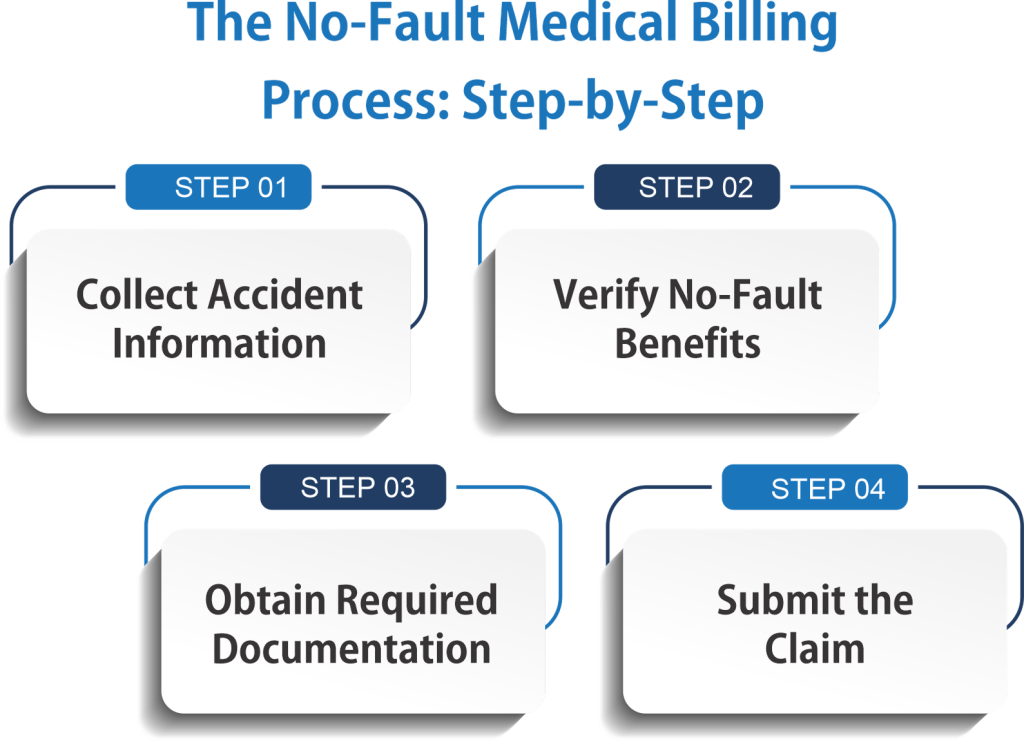
The No-Fault Medical Billing Process: Step-by-Step
Successfully billing a no-fault carrier requires more than simply submitting a claim. Providers must collect accurate information, verify coverage, and maintain proper documentation throughout the reimbursement process.
Step 1: Collect Accident Information
The billing process begins during patient intake. Staff should gather all relevant accident details, including:
- Date of accident
- Location of accident
- Insurance carrier name
- Claim number
- Policy number
- Police report information
- Attorney details, if applicable
Incomplete information at this stage often leads to claim delays later in the process.
Step 2: Verify No-Fault Benefits
Before treatment or claim submission, verify the patient’s coverage to determine:
- Active policy status
- Available benefits
- Coverage limits
- Authorization requirements
- Filing deadlines
Verification helps providers understand reimbursement expectations and avoid billing complications.
Step 3: Obtain Required Documentation
No-fault carriers typically require supporting documentation to validate accident-related treatment.
Important documents may include:
- Assignment of Benefits (AOB)
- Medical records
- Treatment plans
- Diagnostic reports
- Accident reports
- Referral and authorization documents
Accurate documentation strengthens claims and reduces the likelihood of denials.
Step 4: Submit the Claim
Once treatment has been documented, providers can submit claims using the appropriate billing forms and coding guidelines.
Claims should include:
- Accurate diagnosis codes
- Procedure codes
- Accident-related indicators
- Claim number
- Supporting documentation when required
Even minor coding or documentation errors can result in payment delays. Periodic medical billing and coding audits can help identify documentation and coding issues before they affect reimbursement.
Step 5: Monitor Claim Status and Follow Up
Claim submission is only part of the process. Effective follow-up is critical to ensuring timely reimbursement.
Billing teams should:
- Track claim status regularly
- Respond to carrier requests quickly
- Correct rejected claims promptly
- Appeal improper denials
- Monitor payment timelines
Consistent follow-up helps prevent aging accounts receivable and improves overall collections.
Step 6: Manage Denials and Exhausted Benefits
If a claim is denied or benefits are exhausted, providers should immediately determine the reason and take corrective action.
This may involve:
- Filing an appeal
- Providing additional documentation
- Billing a secondary payer
- Coordinating with attorneys involved in the case
A proactive denial management strategy can significantly improve reimbursement outcomes and reduce revenue loss.
Information Providers Must Collect Before Billing a No-Fault Carrier
Accurate information gathering is the foundation of successful no-fault billing. Missing or incorrect details can lead to claim rejections, payment delays, and additional administrative work. Establishing a comprehensive intake process helps ensure claims are submitted correctly the first time.
Patient Information
Start by collecting the patient’s basic demographic and contact information, including:
- Full name
- Date of birth
- Address
- Phone number
- Email address
- Identification details
Accurate patient information ensures claims can be matched correctly by the insurance carrier.
Insurance Information
Providers should obtain complete no-fault insurance details, including:
- Insurance carrier name
- Policy number
- Claim number
- Adjuster name and contact information
- Coverage verification details
Verifying this information before claim submission helps reduce payer-related denials.
Accident Details
Detailed accident information is essential because the carrier must confirm that the treatment is directly related to the reported incident.
Key details include:
- Date of accident
- Time of accident
- Location of accident
- Type of accident
- Description of injuries
- Police report number
The more complete the accident documentation, the easier it is to support medical necessity and claim validity.
Attorney Information
Many accident victims hire legal representation during the claims process.
If an attorney is involved, collect:
- Law firm name
- Attorney contact information
- Case reference number
- Letter of representation, if available
This information can help streamline communication when additional records or claim updates are needed.
Employer Information
In cases involving lost wage benefits or work-related transportation issues, carriers may require employer information.
Collect:
- Employer name
- Employer address
- Employment status
- Work restrictions related to the injury
No-Fault Intake Checklist
Before submitting a claim, confirm that you have:
✔ Patient demographics
✔ Insurance carrier information
✔ Policy and claim numbers
✔ Accident details
✔ Police report information
✔ Medical documentation
✔ Assignment of Benefits (AOB)
✔ Attorney information (if applicable)
✔ Authorization requirements
✔ Coverage verification
Using a standardized checklist can significantly reduce claim errors and improve reimbursement rates.
Common Challenges in No-Fault Medical Billing
No-fault billing offers faster access to medical care for accident victims, but it also presents unique challenges for healthcare providers. Understanding these obstacles can help practices improve claim accuracy and reduce payment delays.
Missing or Incomplete Claim Information
One of the most common reasons for delayed reimbursement is incomplete patient or accident information.
Missing details such as claim numbers, policy information, or accident dates often result in rejected claims that require resubmission.
Coverage Verification Problems
Many providers assume coverage exists without verifying policy details. However, benefits may be inactive, limited, or already exhausted.
Failing to verify benefits before treatment can create significant collection challenges later.
Delayed Carrier Responses
Some no-fault carriers request additional documentation before processing claims.
Common requests include:
- Medical records
- Treatment notes
- Diagnostic reports
- Proof of medical necessity
Delayed responses to these requests can slow the reimbursement process and increase accounts receivable days.
Exhausted Benefits
No-fault policies have coverage limits. Once those limits are reached, the carrier may stop paying claims.
Providers must then determine whether:
- Health insurance can be billed
- The patient is responsible for payment
- Additional coverage sources are available
Failure to monitor benefit balances can result in unexpected revenue losses.
Documentation Deficiencies
No-fault carriers often scrutinize accident-related treatment more closely than traditional health insurers.
Insufficient documentation may lead to:
- Medical necessity denials
- Reduced payments
- Requests for additional records
- Claim audits
Detailed clinical documentation is essential for defending claims and securing reimbursement.
Multiple Insurance Carriers
Some accident cases involve multiple parties and multiple insurance policies.
Providers may need to coordinate between:
- No-fault carriers
- Health insurance plans
- Workers’ compensation insurers
- Liability carriers
Without proper coordination, claims can be delayed or denied due to payer responsibility disputes.
State-Specific Regulations
No-fault insurance laws vary significantly by state. Filing deadlines, documentation requirements, fee schedules, and reimbursement rules may differ depending on where the accident occurred.
Providers treating patients from multiple states must stay informed about changing regulations to remain compliant and avoid avoidable denials.
Administrative Burden
Compared to traditional insurance billing, no-fault claims typically require:
- More documentation
- Additional follow-up
- Frequent communication with adjusters
- Ongoing claim tracking
Without specialized processes or experienced billing staff, these administrative demands can negatively affect practice efficiency and cash flow.
By recognizing these challenges early and implementing strong verification, documentation, and follow-up procedures, providers can improve collections and reduce the risk of claim denials.
CO-21 Denial Code in No-Fault Billing
Claim denials are a common challenge in no-fault medical billing, and one of the most frequently encountered is the CO-21 denial code. Understanding why this denial occurs and how to resolve it can help providers recover payments faster and reduce revenue loss.
The CO-21 denial code indicates that the claim was denied because another payer is responsible for covering the services provided. In accident-related cases, this often means the healthcare provider billed health insurance when the no-fault carrier should have been billed first.
Simply put, the insurance company is informing the provider that payment responsibility belongs to another insurer.
Common Reasons for CO-21 Denials
Several issues can trigger a CO-21 denial.
Incorrect Payer Submission: The provider submits the claim to health insurance instead of the patient’s no-fault carrier.
Missing Accident Information: The claim does not clearly indicate that the treatment resulted from a motor vehicle accident.
Coordination of Benefits Errors: The payer order is incorrect, causing the insurance company to reject the claim.
Incomplete Documentation: Required supporting documents may be missing, preventing the carrier from determining responsibility.
Failure to Verify Coverage: The billing team may not have verified the patient’s accident-related insurance information before claim submission.
How to Resolve a CO-21 Denial: Resolving a CO-21 denial requires identifying the correct payer and resubmitting the claim appropriately.
Verify Insurance Responsibility: Confirm whether a no-fault carrier, workers’ compensation insurer, or another payer should be billed.
Gather Missing Documentation: Ensure all accident-related records, claim numbers, and supporting documents are available.
Correct and Resubmit the Claim: Update the payer information and submit the claim to the appropriate carrier.
Appeal if Necessary: If the denial was issued incorrectly, provide supporting evidence and submit an appeal.
Best Practices to Prevent CO-21 Denials
Healthcare providers can reduce CO-21 denials by:
- Asking accident-related questions during registration
- Verifying coverage before treatment
- Confirming payer responsibility
- Maintaining accurate documentation
- Training staff on coordination of benefits requirements
- Monitoring denied claims regularly
Preventing these denials saves valuable time and helps accelerate reimbursement.
State-Specific No-Fault Insurance Rules Providers Should Know
One of the biggest challenges in no-fault billing is that regulations vary by state. What applies in one state may not apply in another, making it essential for providers to understand local requirements before submitting claims.
Why State Laws Matter
State regulations can affect nearly every aspect of the billing process, including:
- Coverage requirements
- Filing deadlines
- Fee schedules
- Authorization rules
- Documentation standards
- Reimbursement limits
Ignoring these requirements can result in delayed payments or denied claims.
States That Commonly Use No-Fault Insurance Systems
Several states have established no-fault insurance frameworks, including:
- New York
- Florida
- Michigan
- New Jersey
- Pennsylvania (optional no-fault system)
- Hawaii
- Kansas
- Kentucky
- Massachusetts
- Minnesota
- North Dakota
- Utah
Each state has its own rules regarding coverage thresholds, reimbursement procedures, and claim timelines.
Timely Filing Requirements
No-fault carriers often impose strict filing deadlines.
Depending on the state, providers may be required to:
- Submit claims within a specific number of days after treatment
- Respond to documentation requests within designated timeframes
- Appeal denied claims before certain deadlines expire
Missing these deadlines can jeopardize reimbursement.
Authorization and Treatment Requirements
Some states require providers to obtain authorizations for specific services or treatment plans.
Common examples include:
- Advanced diagnostic imaging
- Extended physical therapy programs
- Specialized rehabilitation services
Failure to obtain required approvals may lead to payment reductions or denials.
Fee Schedule Compliance
Many no-fault states regulate reimbursement through fee schedules that determine allowable payment amounts for medical services.
Providers should understand:
- Maximum reimbursement rates
- State-specific coding requirements
- Documentation standards supporting billed services
Knowledge of these rules helps prevent underpayments and billing disputes.
Staying Compliant Across Multiple States
For providers treating accident victims from different jurisdictions, staying current with regulatory changes is critical.
Best practices include:
- Regular staff training
- Periodic compliance reviews
- Monitoring state law updates
- Working with experienced no-fault billing specialists
Keeping up with state-specific requirements helps practices reduce denials and maintain consistent cash flow.
Best Practices for Successful No-Fault Medical Billing
No-fault billing can be highly profitable when managed correctly. However, success depends on strong processes, accurate documentation, and proactive claim management. Implementing the following best practices can help healthcare providers improve collections and minimize reimbursement delays.
Verify Benefits Before Treatment
Always confirm coverage before services are rendered whenever possible.
Verification should include:
- Active policy status
- Available benefits
- Coverage limits
- Claim number confirmation
- Authorization requirements
Early verification reduces billing errors and prevents unexpected payment issues.
Collect Complete Accident Information
Accurate accident details are essential for successful claim submission.
Create standardized intake procedures that capture:
- Date of accident
- Claim number
- Insurance carrier details
- Adjuster information
- Attorney involvement
Obtaining this information upfront helps eliminate delays later in the billing cycle.
Maintain Detailed Clinical Documentation
Strong documentation is often the deciding factor between payment and denial.
Medical records should clearly demonstrate:
- Injury diagnosis
- Treatment necessity
- Progress toward recovery
- Relationship between the accident and services provided
Detailed documentation strengthens claims and supports appeals when necessary.
Submit Claims Promptly
No-fault carriers typically enforce strict filing deadlines.
Submitting claims as soon as possible helps:
- Avoid missed deadlines
- Improve cash flow
- Reduce aging accounts receivable
- Accelerate reimbursement
Delays in submission often create avoidable payment complications.
Track Every Claim
No-fault claims require ongoing monitoring.
Providers should:
- Review claim status regularly
- Identify pending claims
- Follow up on unpaid balances
- Respond quickly to documentation requests
Consistent tracking prevents claims from falling through the cracks.
Develop a Strong Denial Management Process
Even well-prepared claims can be denied.
Successful practices establish procedures for:
- Investigating denials
- Correcting claim errors
- Filing appeals
- Monitoring denial trends
A structured denial management strategy can recover significant lost revenue.
Invest in Staff Training
Because no-fault billing differs from traditional medical billing, ongoing staff education is essential.
Training should cover:
- Payer rules
- State regulations
- Documentation standards
- Coordination of benefits procedures
- Denial prevention techniques
Well-trained teams make fewer errors and achieve better reimbursement outcomes.
Leverage Specialized Billing Expertise
Many healthcare providers choose to work with no-fault billing specialists who understand the complexities of accident-related claims.
Specialized expertise can help practices:
- Reduce denials
- Improve collections
- Increase operational efficiency
- Stay compliant with changing regulations
For organizations that frequently treat accident victims, specialized billing support can have a significant impact on overall revenue performance.
Benefits of Outsourcing No-Fault Medical Billing
Managing no-fault claims in-house can be challenging due to strict regulations, complex documentation requirements, and constant follow-up with insurance carriers. As claim volumes increase, many healthcare providers find that outsourcing no-fault billing improves efficiency, collections, and overall financial performance.
Faster Claim Processing
Experienced no-fault billing specialists understand carrier requirements, filing deadlines, and documentation standards. Their expertise helps ensure claims are submitted accurately and promptly, reducing processing delays.
Faster submissions often lead to quicker reimbursements and improved cash flow.
Lower Denial Rates
No-fault claims are frequently denied because of:
- Incorrect payer information
- Missing documentation
- Coding errors
- Filing deadline violations
Specialized billing teams have established workflows designed to identify and resolve these issues before claims are submitted, significantly reducing denial rates.
Improved Collections
Effective follow-up is one of the most important components of successful no-fault billing.
Outsourced billing professionals continuously monitor claims, communicate with carriers, and address outstanding balances to maximize reimbursements and improve collection rates.
Reduced Administrative Burden
No-fault billing requires extensive administrative work, including:
- Insurance verification
- Documentation management
- Claim submission
- Payment posting
- Denial appeals
- Carrier follow-up
Outsourcing allows providers to focus on patient care while experienced billing professionals manage the revenue cycle.
Better Compliance Management
No-fault regulations frequently change, and requirements can vary by state.
Dedicated billing specialists stay current with:
- State regulations
- Filing requirements
- Fee schedules
- Documentation standards
This helps reduce compliance risks and prevents costly billing errors.
Increased Revenue Opportunities
When claims are submitted accurately, followed up consistently, and appealed effectively, practices often experience:
- Higher reimbursement rates
- Reduced write-offs
- Improved cash flow
- Lower accounts receivable days
For many providers, outsourcing no-fault billing becomes a strategic investment rather than an operational expense.
Need Expert Help With PIP Billing Services?
Successfully managing no-fault and PIP claims requires specialized expertise, accurate documentation, timely submissions, and persistent follow-up. Even minor billing errors can lead to delayed reimbursements, denied claims, and lost revenue.
If your practice regularly treats motor vehicle accident patients, partnering with experienced billing professionals can help streamline your revenue cycle, improve collections, and reduce administrative workload.
Conclusion
A no-fault carrier plays a critical role in medical billing by covering accident-related medical expenses regardless of who caused the accident. For healthcare providers, understanding how no-fault insurance works is essential for ensuring accurate claim submission, preventing denials, and maintaining a healthy revenue cycle.
From verifying coverage and collecting accident details to managing denials and complying with state regulations, every step of the billing process directly impacts reimbursement success.
By implementing proven billing practices and leveraging specialized expertise when needed, providers can reduce administrative challenges, accelerate payments, and maximize revenue from no-fault claims.