Can you bill before the credentialing process is completed, or would payers deny your claims? This is one of the most common questions that physicians and billing teams ask during enrollment or when adding new hires.
Billing before credentialing is one of the leading causes of claim rejection in 2026 healthcare revenue cycles. Across payer systems, providers are often unable to submit reimbursable claims until medical credentialing and enrollment are active in the payer database. Recent 2026 industry data shows that credentialing typically takes 90–150 days, depending on payer type and application accuracy. During this period, providers may deliver services but still cannot reliably bill insurance until approval and effective dates are confirmed.
What happens if the billing is submitted too early? Claims are often denied with statements such as “provider not credentialed” or “provider not enrolled.” This leads to delayed payments, more rework for billing teams, and significant revenue loss that may not always be recoverable. At the same time, 10%-15% of all claim denials in 2026 are due to upstream enrollment and credentialing challenges, creating a key operational risk for health care organizations.
This blog explains how billing before credentialing works, where restrictions apply, and what payer-specific rules govern reimbursement.
Billing Before Credentialing: What Providers Must Understand
Billing before credentialing directly affects claim acceptance and reimbursement eligibility across payer systems. Errors at this stage often lead to immediate denials and delayed revenue cycles.
Providers must understand that billing rights depend on payer enrollment status, not service delivery. Credentialing and billing rules vary by payer, but most systems block claims until provider approval is active.
This section explains what billing before credentialing means in practice and why it affects reimbursement eligibility in real workflows. It also highlights how credentialing status controls whether claims are accepted, rejected, or held in processing systems.
What does billing before credentialing mean in practice
Billing before credentialing means submitting insurance claims for services delivered before the provider is approved in the payer network. In most cases, the provider is not yet active in the payer database.
Claims submitted during this stage are usually rejected with messages such as “provider not enrolled” or “invalid rendering provider.” This stops reimbursement until credentialing approval is completed.
In some limited setups, services may still be documented, but billing must wait until the effective date is confirmed.
Why credentialing affects billing eligibility
Credentialing confirms that a provider meets payer requirements and is authorized for reimbursement under a contract. Without this approval, the payer system does not recognize the provider for claim processing.
This directly impacts billing because claims require a valid provider record linked to an active enrollment file. Without it, the system rejects or suspends payment.
Credentialing also sets the effective date for billing rights, which determines when claims can be submitted for payment.
Credentialing and Billing Rules Across Insurance Payers
Credentialing and billing rules change based on payer type and contract structure. Each payer applies different conditions for provider enrollment and claim acceptance.
Understanding payer-level rules is essential for reducing claim denials and avoiding revenue loss. Medicare, Medicaid, and commercial insurers do not follow the same billing approval logic, which directly affects reimbursement timing.
This section explains how credentialing and billing rules differ across major insurance categories. It also highlights how payer-specific requirements control whether a provider can submit claims or must wait for approval.
Medicare billing rules during credentialing
Medicare requires active enrollment before a provider can submit claims for reimbursement. Claims submitted before approval are often denied without payment eligibility.
Medicare may allow limited retroactive billing depending on enrollment approval dates. However, reimbursement is only valid within defined time windows set by CMS rules.
Incident-to billing may apply in specific supervised care settings. The billing provider must still meet supervision and documentation requirements.
Medicaid billing rules and state differences
Medicaid billing standards differ among state Medicaid organizations. Each state sets its own provider enrollment and approval timelines.
Some states allow limited retroactive enrollment, but approval is not guaranteed. Claims submitted without active enrollment are commonly denied.
Provider status must be verified before submitting a bill. State-specific rules determine when claims become payable.
Commercial insurance billing rules
Commercial insurance plans follow contract-based credentialing rules. Providers must be approved within each payer network before billing.
Billing without an active participation status leads to claim rejection. Each insurer applies different enrollment verification checks.
Some plans may allow temporary billing only after contract activation. Payment depends on effective date confirmation and network listing.
Billing During Credentialing Pending Status and Risk Factors
Billing while credentialing is pending causes immediate uncertainty in claim acceptance because payer systems may not recognize the provider. In most cases, services can be delivered, but reimbursement eligibility remains blocked until enrollment is active.
This stage is critical because it is where most preventable denials occur. Understanding billing during credentialing pending status helps reduce rejected claims, compliance exposure, and revenue delays.
What happens when claims are submitted during pending status
Claims submitted during pending status are usually rejected at the payer validation stage. The system cannot match the provider to an active enrollment record.
This leads to immediate denial or suspension of claim processing until credentialing is completed. Billing teams often face rework and delayed reimbursement cycles.
- Claims denied due to “provider not enrolled” status
- Immediate rejection at the payer validation stage
- No payment is issued until approval is completed
- Increased claim rework for billing teams
- Delayed cash flow for the practice
Compliance risks in early billing
Early billing before credentialing approval can create compliance exposure depending on payer rules and documentation accuracy. These risks increase during audits or claim reviews.
Improper submission may be flagged as incorrect billing activity, especially if provider details are not yet active in the payer system.
- Potential False Claims Act exposure in severe cases
- Higher probability of payer audit review
- Risk of claim recoupment after payment
- Incorrect use of provider identifiers (NPI issues)
- Documentation mismatch during claim validation
When limited billing may apply
Some controlled billing situations allow limited exceptions, but these depend on payer policy and supervision rules. These cases are not standard across all insurers.
Even when permitted, strict documentation and supervision requirements must be met before reimbursement is approved.
- Incident-to billing under Medicare supervision rules
- Locum tenens arrangements for temporary coverage
- Group practice billing under an enrolled supervising provider
- Emergency or urgent care exceptions in select cases
- Full documentation and payer compliance required
Provider Credentialing and Billing Process Explained
Provider credentialing and billing process links payer approval with claim submission eligibility. Billing cannot begin until the provider is verified and activated in the payer system.
This process is critical because it determines when claims can be accepted and paid. Any gap in enrollment directly affects reimbursement timing and claim acceptance rates.
This section explains how credentialing is completed step by step, how billing readiness is confirmed, and how billing teams support the transition from enrollment to active billing.
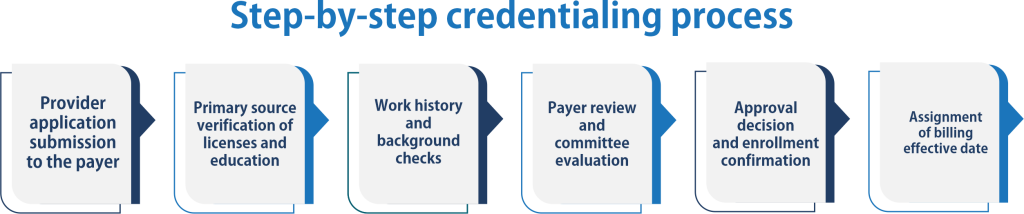
Step-by-step credentialing process
Credentialing follows a structured verification workflow before payer approval is granted. Each step confirms provider identity, qualifications, and eligibility for network participation.
The process starts with application submission and ends with payer approval and activation. Any missing or incorrect data can delay billing eligibility.
- Provider application submission to the payer
- Primary source verification of licenses and education
- Work history and background checks
- Payer review and committee evaluation
- Approval decision and enrollment confirmation
- Assignment of billing effective date
How billing readiness is determined
Billing readiness depends on payer activation status and system recognition of the provider. Claims cannot be processed without this confirmation.
The provider must be listed as active in the payer database and have a valid effective date. Any error prevents a claim submission from being approved.
- Active status in the payer enrollment system
- Confirmed effective billing date
- Matching NPI and taxonomy details
- Contract participation approval completed
Role of billing teams during credentialing
Billing teams manage claim flow while credentialing is in progress to prevent early submission errors. Their role supports compliance and revenue protection.
They coordinate with credentialing staff to track approval status and avoid billing before activation. This reduces denial rates and rework.
- Hold claims until credentialing approval is received
- Monitor payer enrollment status updates
- Coordinate with credentialing and compliance teams
Revenue Impact of Billing Without Credentialing
Billing without credentialing directly affects reimbursement flow and financial stability in healthcare practices. Claims submitted without active enrollment are often denied or held by payer systems.
The revenue impact is significant because credentialing delays interrupt cash flow and increase administrative workload. This section explains how denial patterns, delayed payments, and operational risks affect overall revenue performance.
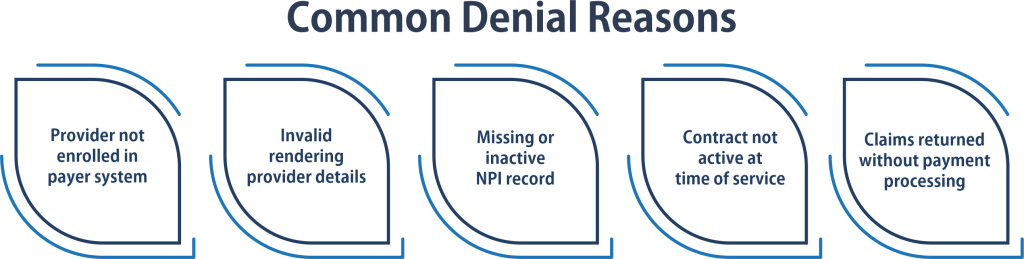
Common denial reasons
Billing without credentialing results in predictable denial patterns from payer systems. These denials usually occur at the first stage of claim validation.
The revenue impact is significant because credentialing delays interrupt cash flow and increase administrative workload. Strong denial management services can help practices identify, appeal, and prevent avoidable reimbursement issues caused by enrollment delays.
- Provider not enrolled in payer system.
- Invalid rendering provider details
- Missing or inactive NPI record
- Contract not active at time of service
- Claims returned without payment processing
Financial impact on practices
Revenue loss occurs when claims are delayed, denied, or require resubmission. This creates gaps in expected cash flow for healthcare organizations.
Practices may continue delivering services but receive no reimbursement until credentialing is completed. This increases financial pressure on operations.
- Delayed cash inflow from insurance claims
- Increased accounts receivable backlog
- Higher rework cost for billing teams
- Temporary reliance on self-pay collections
- Reduced monthly revenue predictability
Conclusion
Billing before credentialing is not a timing issue; it is a payer eligibility requirement. Claims submitted without active enrollment are commonly denied, delayed, or returned without payment. Understanding credentialing status is essential for protecting revenue and maintaining clean claim flow.
Healthcare providers and billing teams must align credentialing timelines with billing workflows to avoid preventable revenue loss. Working with experienced medical billing services alongside enrollment and compliance teams helps reduce denials and improve reimbursement stability across payer systems.
FAQs
Can you bill before credentialing is complete?
No. Most payers do not allow reimbursement until credentialing and enrollment are active. Claims submitted early are usually denied or rejected.
What happens if you bill without credentialing?
Claims are commonly denied with “provider not enrolled” errors. This leads to delayed payments and additional rework for billing teams.
Can services be provided before credentialing approval?
Yes, services can often be provided, but insurance billing cannot proceed until payer approval and effective dates are confirmed.
Is retroactive billing allowed after credentialing approval?
Some payers allow limited retroactive billing, but it depends on payer rules and the provider’s enrollment effective date.
How long does credentialing usually take before billing can start?
Credentialing typically takes 90–150 days in 2026, depending on payer requirements, provider type, and application accuracy.