Mental health crises require immediate clinical attention and accurate billing to ensure providers are properly reimbursed for the intensive care they deliver. When patients present with suicidal ideation, severe emotional distress, or acute psychiatric symptoms, providers must know how to correctly report crisis psychotherapy services using CPT codes 90839 and 90840.
These crisis intervention codes are specifically designed for high-intensity, time-sensitive mental health treatment and follow different rules than standard psychotherapy codes. However, many providers struggle with time thresholds, documentation requirements, and payer compliance, which can lead to claim denials or underbilling.
In this article, we break down when to use CPT 90839 and 90840, how crisis therapy differs from routine psychotherapy, required documentation, and common billing mistakes to avoid.
What Are Crisis Intervention CPT Codes?
Crisis intervention CPT codes are used when a patient presents with a mental health emergency that requires immediate and intensive clinical attention. These services go beyond routine psychotherapy because the patient is experiencing acute psychological distress that could pose a risk to themselves or others.
In these situations, mental health professionals must quickly assess the severity of the crisis, stabilize the patient, and implement interventions to reduce immediate risk. Crisis psychotherapy sessions often involve rapid evaluation, emotional stabilization, safety planning, and coordination with family members or emergency resources.
To properly report these services, providers use two specific CPT codes:
- CPT 90839: Psychotherapy for crisis; first 60 minutes
- CPT 90840: Add-on code for each additional 30 minutes
These codes allow providers to bill for the time-intensive and urgent nature of crisis management, which requires significantly more clinical effort than standard therapy sessions.
It is important to note that crisis intervention codes are not used for routine psychotherapy sessions and should only be billed when the clinical situation clearly qualifies as a psychiatric emergency requiring immediate intervention.
CPT Code 90839: Psychotherapy for Crisis (First 60 Minutes)
CPT code 90839 is the primary code used for crisis psychotherapy services and covers the first 60 minutes of crisis intervention provided to a patient in acute psychological distress.
This code represents the initial period of intensive crisis management where the provider focuses on rapid stabilization and risk assessment. The service must involve active therapeutic work aimed at resolving or reducing the immediate crisis.
Key Services Included in CPT 90839
Crisis psychotherapy under 90839 may include several urgent clinical activities, such as:
- Immediate mental status and risk assessment
- Evaluation of suicidal or homicidal ideation
- Emotional stabilization and de-escalation techniques
- Safety planning with the patient
- Coordination with family members, caregivers, or emergency services
- Clinical decision-making regarding hospitalization or referral
These services require focused clinical attention and urgent decision-making, which distinguishes them from standard therapy sessions.
Time Requirement for CPT 90839
CPT 90839 follows specific time guidelines that providers must meet to bill the service.
| Time Spent in Crisis Psychotherapy | Code Used |
| 30–74 minutes | 90839 |
| 75 minutes or more | 90839 + 90840 |
Providers must document the exact amount of time spent delivering crisis psychotherapy, including start and stop times when possible.
When to Use CPT 90839
Providers should use this code when a patient presents with conditions such as:
- Suicidal thoughts or behaviors
- Severe panic attacks
- Acute trauma reactions
- Psychotic symptoms
- Extreme emotional distress requiring immediate intervention
In these cases, the provider’s primary goal is rapid stabilization and prevention of harm, which qualifies the encounter as crisis psychotherapy.
CPT Code 90840: Add-On Code for Additional Crisis Time
CPT code 90840 is an add-on code used when crisis psychotherapy extends beyond the initial hour covered by CPT 90839. It represents each additional 30 minutes of crisis intervention services provided during the same encounter.
This code allows providers to bill appropriately for longer crisis sessions, which are common when patients require extended stabilization or ongoing risk assessment.
Important Billing Rule
CPT 90840 cannot be billed independently. It must always be used in combination with CPT 90839.
Time-Based Billing Example
| Total Session Length | CPT Codes Billed |
| 60 minutes | 90839 |
| 90 minutes | 90839 + 90840 |
| 120 minutes | 90839 + 90840 (x2) |
Each additional 30-minute block of crisis psychotherapy can be reported with another unit of 90840, provided the time and medical necessity are properly documented.
Documentation Requirements for 90840
To support billing for additional crisis time, providers should clearly record:
- Total face-to-face time spent with the
- Clinical interventions performed during the extended session
- Continued risk assessment and stabilization efforts
- Progress toward resolving the crisis
Thorough documentation helps demonstrate medical necessity and protects providers during payer audits.
Crisis Intervention vs Standard Psychotherapy Codes
One of the most common areas of confusion in behavioral health billing is the difference between crisis psychotherapy codes and routine psychotherapy codes. Understanding this distinction is essential for avoiding claim denials and maintaining compliance with payer guidelines.
Standard psychotherapy sessions typically focus on ongoing mental health treatment, where providers address conditions such as depression, anxiety, trauma, or relationship issues through structured therapeutic interventions.
Crisis psychotherapy, however, involves urgent clinical intervention when a patient is experiencing a severe psychological emergency that requires immediate stabilization.
Key Differences Between Crisis and Routine Psychotherapy
| Service Type | CPT Codes | Purpose |
| Standard Psychotherapy | 90832, 90834, 90837 | Routine therapy sessions for ongoing treatment |
| Crisis Psychotherapy | 90839, 90840 | Immediate intervention for psychiatric emergencies |
| Diagnostic Evaluation | 90791, 90792 | Initial mental health assessment |
Crisis intervention services involve additional responsibilities such as:
- Immediate risk assessment
- Rapid clinical decision-making
- Stabilization of acute symptoms
- Safety planning
- Possible coordination with family members, emergency services, or hospitals
Because of this higher level of care intensity, crisis psychotherapy codes should not be billed on the same day as standard psychotherapy codes.
If a session primarily focuses on stabilizing a psychiatric emergency, the provider should bill 90839 (and 90840 if applicable) instead of routine therapy codes.
Documentation Requirements for Crisis Intervention Billing
Accurate and detailed documentation is one of the most important elements of successful crisis intervention billing. Insurance payers frequently review crisis psychotherapy claims to ensure the services provided truly meet the criteria for medical necessity and emergency intervention.
Without proper documentation, providers may face claim denials, payment delays, or audit risks.
Key Documentation Elements Providers Must Include
When billing crisis intervention services, providers should document the following components clearly in the patient’s clinical record.
1. Description of the Presenting Crisis
The provider must describe the specific psychiatric emergency that required immediate intervention.
Examples include:
- Suicidal ideation or suicide attempt
- Severe panic or anxiety episodes
- Psychotic symptoms
- Acute trauma response
- Extreme emotional distress with safety concerns
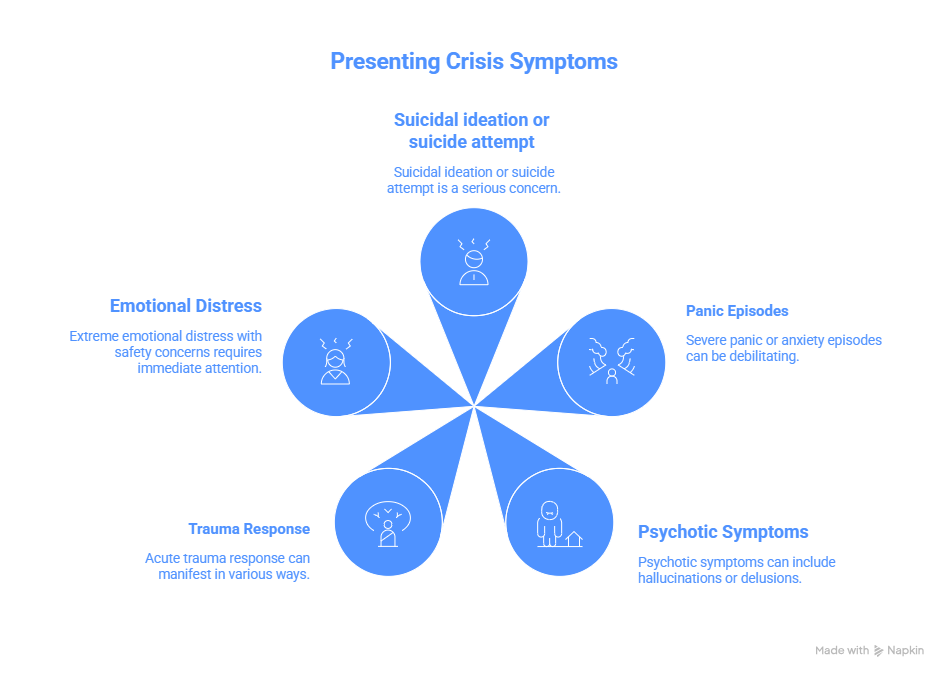
The documentation should clearly explain why the situation qualified as a crisis rather than a routine therapy session.
2. Clinical Assessment and Risk Evaluation
Providers should record the mental status examination and risk assessment findings, including:
- Suicide risk evaluation
- Harm to others risk
- Level of psychological distress
- Cognitive and emotional functioning
This information supports the medical necessity for crisis intervention services.
3. Interventions Performed During the Session
The clinical note should outline the specific therapeutic techniques used to stabilize the patient, such as:
- De-escalation techniques
- Crisis counseling
- Safety planning
- Cognitive or behavioral interventions
- Family involvement when appropriate
Payers want to see active crisis management efforts, not just supportive conversation.
4. Time Documentation
Because crisis psychotherapy codes are time-based, providers must clearly document:
- Total face-to-face time
- Session start and stop times (recommended)
- Time spent performing crisis stabilization
Incomplete time documentation is one of the most common reasons for claim denials.
5. Outcome and Follow-Up Plan
The provider should also document the result of the crisis intervention, including:
- Patient stabilization status
- Safety plan created
- Referral to emergency services if needed
- Scheduled follow-up appointments
This helps demonstrate that the provider addressed the crisis and established a continuity-of-care plan.
Who Can Bill Crisis Intervention CPT Codes?
Crisis psychotherapy services can be billed by qualified behavioral health professionals who are licensed and credentialed with the relevant insurance payer.
While eligibility varies depending on payer policies and state regulations, the following professionals are commonly authorized to bill CPT codes 90839 and 90840.
Eligible Mental Health Providers
- Psychiatrists
- Clinical psychologists
- Licensed clinical social workers (LCSW)
- Licensed professional counselors (LPC)
- Licensed marriage and family therapists (LMFT)
- Psychiatric nurse practitioners
These providers must typically meet the following requirements:
- Hold an active professional license
- Be credentialed with the insurance payer
- Provide services within their scope of practice
- Deliver crisis psychotherapy face-to-face or via approved telehealth platforms
Payer-Specific Credentialing Rules
Some insurance companies may require additional conditions, such as:
- Supervision requirements for associate-level clinicians
- Telehealth billing modifiers
- Specific documentation standards
Because policies vary widely across payers, providers should always verify credentialing requirements and billing rules before submitting crisis psychotherapy claims.
Practices that manage large volumes of behavioral health services often rely on specialized support to ensure accurate billing, compliance, and faster reimbursements. Professional mental health billing services can help providers reduce claim denials while maintaining proper documentation and coding compliance.
Common Billing Mistakes to Avoid
Even experienced behavioral health providers can make billing errors when reporting crisis psychotherapy services. Because CPT codes 90839 and 90840 are frequently reviewed by payers, incorrect billing can quickly lead to claim denials, reimbursement delays, or audit risks.
Understanding the most common mistakes can help providers maintain compliance and improve payment success.
1. Using Crisis Codes for Routine Therapy
One of the most frequent errors is billing crisis intervention codes for standard psychotherapy sessions. Crisis codes should only be used when the patient is experiencing a true psychiatric emergency requiring immediate stabilization.
If the session focuses on routine therapy topics without urgent risk factors, providers should instead use standard psychotherapy CPT codes (90832–90837).
2. Failing to Document the Crisis Clearly
Payers require documentation that demonstrates medical necessity for crisis services. If the clinical note does not clearly describe the psychiatric emergency, the claim may be denied.
Providers should explicitly document:
- The presenting crisis
- Risk assessment findings
- The urgency of the situation
- Why was a crisis-level intervention required
3. Missing or Incomplete Time Documentation
Crisis psychotherapy codes are time-based services, so providers must clearly document the total time spent delivering crisis care.
Common time-related mistakes include:
- Not documenting session length
- Omitting start and stop times
- Billing additional units without supporting time documentation
Clear time documentation is essential when billing multiple units of CPT 90840.
4. Billing 90840 Without 90839
CPT 90840 is an add-on code, meaning it can only be billed when 90839 has already been reported for the initial hour of crisis psychotherapy.
Submitting 90840 alone will almost always result in claim rejection.
5. Billing Crisis Codes With Psychotherapy Codes
Providers should not bill crisis intervention codes together with routine psychotherapy codes on the same date of service.
For example, the following combinations are generally not allowed:
- 90839 with 90832
- 90839 with 90834
- 90839 with 90837
Crisis services represent a higher level of care intensity, which replaces standard therapy billing for that encounter.
Avoiding these mistakes can significantly improve clean claim rates and reimbursement speed.
Insurance and Reimbursement Considerations
Coverage for crisis psychotherapy services varies depending on the insurance payer. While most health plans recognize CPT codes 90839 and 90840, providers must follow payer-specific billing guidelines to ensure successful reimbursement.
Medicare Billing Rules
Medicare generally reimburses crisis psychotherapy services when the following conditions are met:
- Services are medically necessary
- The provider is Medicare-enrolled and credentialed
- Documentation clearly supports crisis-level intervention
- The service meets the required time thresholds
Medicare may also require appropriate place-of-service codes and modifiers, particularly for telehealth encounters.
Commercial Insurance Policies
Private insurance plans may have additional requirements, such as:
- Telehealth restrictions or modifiers
- Authorization requirements
- Specific documentation standards
- Limits on the number of crisis sessions covered
Providers should verify payer policies before billing to avoid unexpected denials.
Medicaid Considerations
Medicaid programs vary significantly by state. Some states offer expanded coverage for crisis services, including:
- Mobile crisis intervention
- Community-based crisis response
- Telehealth crisis therapy
Practices that frequently provide crisis care often benefit from working with specialized billing teams that understand behavioral health payer rules and compliance standards.
Best Practices for Crisis Intervention Billing
Implementing consistent billing and documentation practices can help mental health providers reduce denials and improve reimbursement accuracy.
Below are some key strategies that support compliant crisis intervention billing.
Clearly Document Medical Necessity
Always explain why the patient’s condition qualified as a crisis rather than routine therapy. Include details about risk factors, symptom severity, and urgent clinical needs.
Record Accurate Time
Since crisis psychotherapy codes are time-based, providers should document:
- Total face-to-face time
- Start and stop times
- Time spent performing crisis interventions
This ensures accurate reporting for 90839 and additional 90840 units.
Include Detailed Intervention Notes
Clinical documentation should show the active therapeutic work performed during the crisis session, such as stabilization techniques, safety planning, and coordination with caregivers.
Verify Payer Policies
Different payers may have unique requirements for crisis services. Regularly reviewing payer guidelines helps ensure compliance and reduces rejected claims.
Work With Specialized Behavioral Health Billing Experts
Behavioral health billing is complex, especially when dealing with time-based crisis psychotherapy codes and varying payer rules. Many mental health practices improve revenue cycle performance by partnering with experienced billing professionals who understand psychiatric coding requirements.
Sumamry
Crisis psychotherapy services play a vital role in helping patients navigate acute mental health emergencies. Properly billing CPT codes 90839 and 90840 ensures providers are reimbursed for the time, expertise, and intensive clinical care required to stabilize patients in crisis.
By understanding the time requirements, documentation standards, and payer-specific billing rules, mental health professionals can reduce claim denials while maintaining full compliance with insurance regulations.
Practices that want to simplify complex behavioral health billing processes and improve reimbursement outcomes often benefit from expert support. Professional behavioral health billing services can help providers optimize their revenue cycle while allowing clinicians to focus on delivering critical care to patients in need.
FAQs
Q: What is the minimum time required to bill CPT 90839?
Ans: Providers must spend at least 30 minutes delivering crisis psychotherapy services in order to bill CPT code 90839.
Q: Can CPT 90839 be billed via telehealth?
Ans: Some insurance payers allow crisis psychotherapy to be provided through telehealth platforms, but policies vary. Providers should confirm telehealth coverage and required modifiers with each payer.
Q: How many times can CPT 90840 be billed?
Ans: CPT 90840 may be billed multiple times for each additional 30 minutes of crisis psychotherapy provided after the first hour billed with 90839.
Q: Can crisis psychotherapy codes be billed with diagnostic evaluation codes?
Ans: In most cases, crisis psychotherapy codes should not be billed together with diagnostic evaluation codes (90791 or 90792) during the same encounter.