When you walk into a hospital or clinic, you share more than just symptoms; you reveal deeply personal details about your life, health, and sometimes even your fears. That level of openness doesn’t happen by accident; it exists because patients trust that their information will remain private.
Confidentiality in the medical field is what makes honest conversations possible, accurate diagnoses achievable, and effective treatment plans realistic. Without it, patients may hold back critical details, putting their own health at risk.
Exploring why confidentiality matters isn’t just important for healthcare professionals; it’s essential for anyone who values safe, respectful, and effective care.
What Is Confidentiality in Healthcare?
Confidentiality in healthcare refers to the responsibility of medical professionals to keep a patient’s personal and medical information private. This includes everything from medical history and diagnosis to conversations held during consultations. Patients trust that the information they share will only be used for their care and will not be disclosed without their permission.
Healthcare confidentiality applies across all forms of communication. Whether information is stored in digital records, written files, or discussed verbally, it must be protected from unauthorized access. This responsibility is not limited to doctors alone. Nurses, administrative staff, technicians, and anyone involved in patient care must follow the same standards of privacy.
Protection of personal data: Patient identity, medical history, and treatment details must be securely stored and handled with care to prevent misuse or exposure
Controlled sharing of information: Data should only be shared with professionals directly involved in the patient’s treatment or when legally required
Ethical responsibility: Healthcare workers are expected to respect patient privacy as part of their professional duty
Legal compliance: Medical institutions must follow laws and policies designed to protect patient information and prevent data breaches
Importance of Confidentiality in the Medical Field
Confidentiality plays a central role in maintaining the quality and reliability of healthcare services. When patients feel secure about their privacy, they are more willing to provide complete and honest information, which directly improves the accuracy of diagnosis and effectiveness of treatment.
A healthcare system that prioritizes confidentiality builds a strong reputation for professionalism and trustworthiness. On the other hand, any breach of patient privacy can lead to serious consequences, including loss of trust, legal penalties, and damage to institutional credibility.
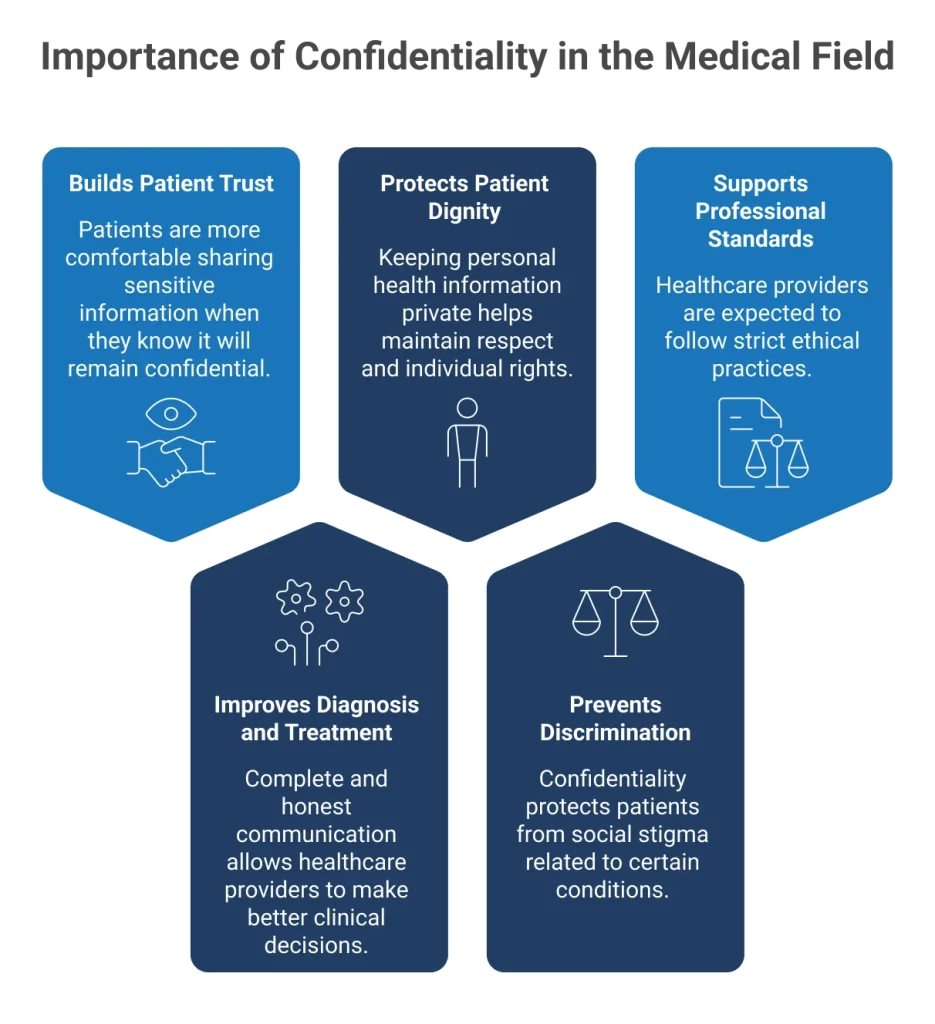
- Builds patient trust
Patients are more comfortable sharing sensitive information when they know it will remain confidential - Improves diagnosis and treatment
Complete and honest communication allows healthcare providers to make better clinical decisions - Protects patient dignity
Keeping personal health information private helps maintain respect and individual rights - Prevents discrimination
Confidentiality protects patients from social stigma related to certain conditions - Supports professional standards
Healthcare providers are expected to follow strict ethical practices - Avoids legal consequences
Proper handling of patient data reduces the risk of lawsuits and penalties
Why Is Confidentiality Important to Patients?
For patients, confidentiality is not just a policy. It directly affects how safe and comfortable they feel when seeking medical care. Many health issues involve deeply personal topics, and without assurance of privacy, patients may avoid discussing important details or delay seeking treatment altogether.
Confidentiality allows patients to speak openly about their concerns without fear of judgment or exposure. This openness leads to stronger relationships with healthcare providers and better overall care experiences.
Encourages honest communication
Patients are more likely to share complete information about symptoms and lifestyle factors.
Protects sensitive details
Information related to mental health, reproductive health, or chronic conditions remains secure.
Reduces stress and fear
Knowing that personal data is protected creates a sense of safety and confidence.
Improves health outcomes
Open communication helps healthcare providers create accurate and effective treatment plans.
Maintains personal reputation
Confidentiality prevents misuse of private information in social or professional settings.
Maintaining Patient Confidentiality
Protecting patient information requires consistent attention in every part of the healthcare process. From the moment a patient shares their details to the storage and use of that information, confidentiality must be preserved at all times.
Even small mistakes, such as discussing a case in a public space or leaving records unsecured, can lead to serious privacy breaches.
- Secure record management
Patient files, whether digital or physical, should be stored in protected systems with restricted access to prevent unauthorized viewing - Access control measures
Only staff directly involved in patient care should have permission to view specific medical information - Private communication practices
Conversations about patients should take place in secure environments where they cannot be overheard - Staff training and awareness
Regular training ensures that all healthcare workers understand privacy policies and their responsibilities - Strong authentication systems
Passwords, biometric verification, and secure login methods help protect digital health records - Safe disposal of information
Old records must be properly destroyed or permanently deleted to prevent data leaks
How to Maintain Patient Confidentiality Effectively?
Maintaining confidentiality goes beyond basic practices. It requires a structured approach that combines technology, policies, and responsible behavior. Healthcare organizations must actively create an environment where patient privacy is treated as a top priority.
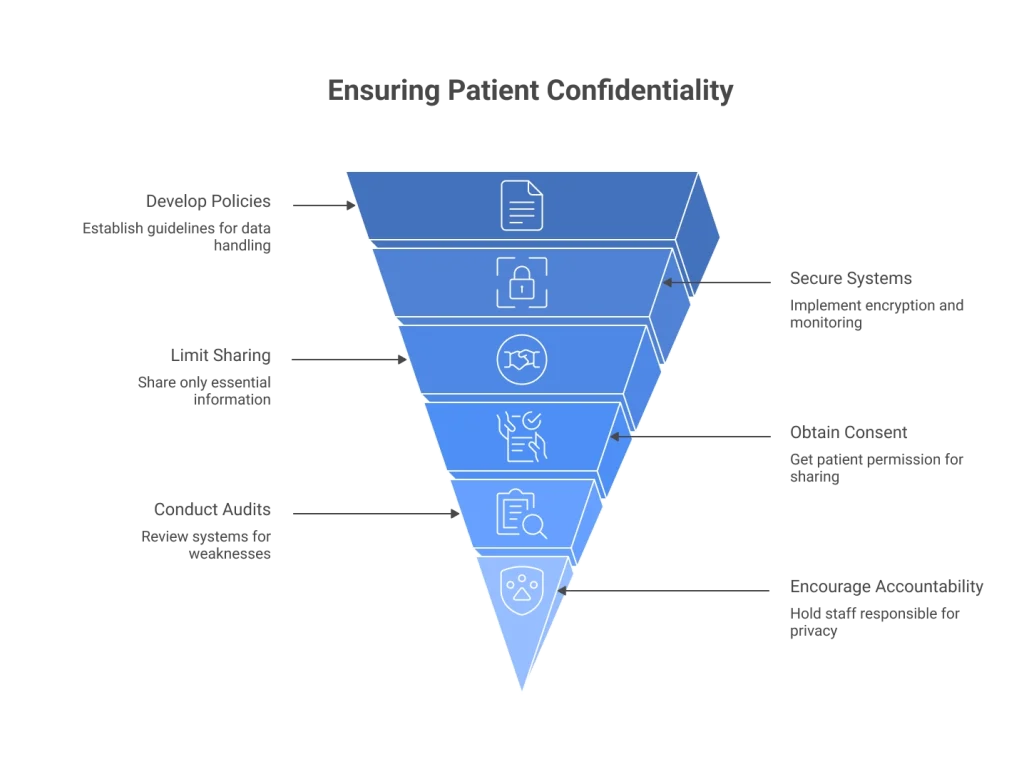
Develop clear privacy policies: Organizations should define how patient information is collected, used, and shared to avoid confusion or misuse
Use secure digital systems: Electronic health records must be encrypted and regularly monitored to detect unauthorized access
Limit unnecessary data sharing: Only essential information should be shared, and only with those who need it for treatment or legal reasons
Obtain patient consent: Patients should always be informed and give permission before their information is shared beyond their care team
Conduct regular audits: Reviewing systems and procedures helps identify potential weaknesses and prevent breaches
Encourage accountability: Every staff member should understand their role in protecting patient privacy and be held responsible for their actions
Consequences of Breaching Confidentiality
Breaching confidentiality in healthcare is not a minor mistake; it can have serious legal, professional, and personal consequences. Patient information is highly sensitive, and any unauthorized disclosure can harm both the patient and the healthcare provider.
1. Legal Penalties
Healthcare providers are legally obligated to protect patient information. Violating confidentiality laws can result in severe penalties, including fines, lawsuits, and even loss of medical licenses.
In many countries, strict data protection regulations govern how patient information must be handled. A breach, whether intentional or accidental, can lead to legal action from both regulatory bodies and affected patients. This makes maintaining patient confidentiality not just an ethical duty but a legal requirement.
2. Loss of Patient Trust
Trust is the foundation of the patient-provider relationship. When confidentiality is compromised, patients may feel betrayed and unsafe. This loss of trust can lead patients to withhold important medical information, avoid seeking treatment, or switch healthcare providers altogether.
Ultimately, this affects the quality of care and can result in poor health outcomes. This is one of the key reasons why confidentiality is important to patients.
3. Damage to Professional Reputation
A breach of confidentiality can significantly harm a healthcare professional’s reputation. Word spreads quickly, especially in the digital age, and even a single incident can tarnish credibility.
Healthcare institutions may also suffer reputational damage, leading to loss of patients and trust within the community. For professionals, this can mean fewer career opportunities and long-term consequences in their field.
Real-Life Examples of Confidentiality in Healthcare
Understanding what confidentiality in healthcare is becomes easier when we look at real-life scenarios. These examples illustrate how confidentiality should be maintained, and what can go wrong when it isn’t.
Example 1: Proper Handling of Medical Records
A nurse ensures that a patient’s electronic health record is only accessed when necessary and logs out immediately after use. This demonstrates how to maintain patient confidentiality through secure systems and responsible behavior.
Example 2: Conversations in Private Settings
A doctor discusses a patient’s diagnosis in a private consultation room instead of a public hallway. This protects the patient’s privacy and shows respect for sensitive information.
Example 3: Social Media Misuse
A healthcare worker shares a patient’s story online without revealing the name but includes enough details for identification. This still counts as a breach and highlights the importance of being cautious even on personal platforms.
Example 4: Unauthorized Access to Records
An administrative staff member looks at a celebrity patient’s medical file out of curiosity. Even without sharing the information, accessing records without permission violates confidentiality policies.
Conclusion
Confidentiality in the medical field is essential for building trust, ensuring accurate care, and protecting patient rights. When patients feel confident that their information is safe, they are more willing to communicate openly, leading to better diagnoses and improved treatment outcomes.
Healthcare providers who prioritize confidentiality not only meet ethical and legal standards but also strengthen the overall quality of care.
In a world where information is increasingly digital, maintaining patient privacy is more important than ever and remains a critical part of responsible healthcare practice.
FAQs
Q: What is confidentiality in healthcare?
Ans: Confidentiality in healthcare refers to the ethical and legal duty of healthcare professionals to protect a patient’s personal and medical information from unauthorized access or disclosure.
Q: Why is confidentiality important in the medical field?
Ans: Confidentiality is important because it builds trust, ensures accurate communication, protects patient privacy, and helps healthcare providers deliver safe and effective treatment.
Q: How can healthcare professionals maintain patient confidentiality?
Ans: Healthcare professionals can maintain confidentiality by securing records, limiting access to authorized individuals, avoiding public discussions of patient information, and following privacy laws and policies.
Q: What happens if patient confidentiality is broken?
Ans: If confidentiality is breached, it can lead to legal penalties, loss of patient trust, damage to professional reputation, and negative impacts on patient care.