If you’re running a home health agency and your reimbursements feel unpredictable, there’s a high chance LUPA (Low Utilization Payment Adjustment) is quietly draining your revenue. Many providers don’t realize that even a small drop in visit count can instantly shift a full Medicare payment into a much lower per-visit payout.
Under PDGM home health billing, this risk has become even more complex, with variable thresholds and stricter reimbursement rules. The reality is simple: if you don’t fully understand how LUPA Medicare works, how thresholds are calculated, and how visit utilization impacts payments, you’re leaving money on the table.
This article breaks it all down so you can take control, prevent avoidable losses, and optimize your billing strategy with confidence.
What is LUPA?
LUPA (Low Utilization Payment Adjustment) is a Medicare payment rule that directly impacts how home health agencies get reimbursed. In simple terms, LUPA occurs when the number of patient visits during a care period falls below a required threshold, triggering a reduced, per-visit payment instead of a full bundled payment.
Here’s what that means in practice:
- Medicare expects a minimum number of visits within a 30-day care period
- If your agency delivers fewer visits than required → LUPA is triggered
- Instead of receiving a full case-based payment, you are paid per individual visit, which is significantly lower
This isn’t just a minor adjustment; it can cut your expected revenue dramatically, even if the care was clinically appropriate.
Simple Example:
- Expected full payment: $2,000
- Visits completed: Below threshold
- LUPA payment: $600–$900 (varies per visit type)
That gap is where agencies lose money.
LUPA in Home Health (Why It Matters More Than You Think)
In the world of Lupa Home Health, this adjustment is one of the biggest hidden threats to profitability. Many agencies unknowingly trigger LUPA due to poor planning, scheduling gaps, or misunderstandings of PDGM requirements.
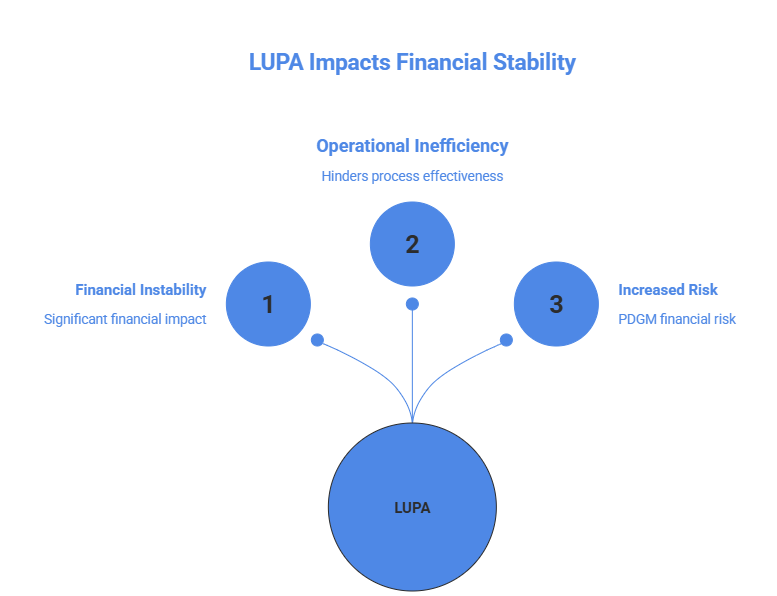
Why LUPA Matters:
1. Direct Revenue Loss: Even one missed or delayed visit can push a case below the threshold, converting a full payment into a reduced one.
2. Operational Inefficiency: LUPA cases often still require administrative effort, clinician time, and documentation, but with much lower reimbursement.
3. Increased Financial Risk Under PDGM: With PDGM (Patient-Driven Groupings Model), thresholds are no longer fixed. Each patient may have a different required visit count, making it easier to unintentionally fall short.
The Real Problem Providers Face
Many agencies assume:
- “We provided necessary care, so we’ll be paid fairly.”
But Medicare doesn’t work that way.
Payment is tied to utilization thresholds, not just care quality. That means:
- Clinically appropriate care can still result in financial loss
- Poor visit planning = avoidable LUPA penalties
What Makes LUPA So Critical Today?
- Variable thresholds (2–6 visits depending on patient grouping)
- Complex billing under PDGM
- Increased scrutiny on utilization patterns
LUPA Medicare: How It Actually Works in Real Billing Scenarios
When it comes to LUPA Medicare, most providers misunderstand one critical thing: Medicare is not just paying for care; it is paying based on how care is utilized within a defined structure. This is where many agencies lose control of their revenue.
Under the Patient-Driven Groupings Model (PDGM), every patient admitted into home health is assigned a 30-day payment period. This period is not random; it is tied to a case-mix classification, which determines how much Medicare expects to pay for that patient’s care. However, this full payment is conditional, not guaranteed.
Each patient group comes with a minimum visit threshold. If your agency meets or exceeds that threshold, you receive the full bundled Medicare payment. But if you fall short, even by a single visit, Medicare automatically applies LUPA, shifting your reimbursement model entirely.
Instead of receiving a predictable, case-based payment, your agency is now reimbursed per visit, which significantly reduces total revenue.
What Changes When LUPA Is Triggered?
When LUPA is applied, the entire financial structure of the case changes. It’s not a minor adjustment; it’s a complete shift in how you get paid.
- You lose eligibility for the full PDGM payment amount
- Medicare switches to a standardized per-visit payment rate
- Each discipline (nursing, therapy, aide) is paid separately
- The total reimbursement becomes much lower than expected
This means that even if your team delivered high-quality, efficient care, the reimbursement may not reflect the effort or resources used.
Why Medicare Uses LUPA?
Medicare’s logic is based on utilization. The system assumes:
- Fewer visits = less resource use
- Less resource use = lower payment
But in real-world care delivery, this assumption doesn’t always hold true.
Patients may:
- Recover faster than expected
- Require fewer but more intensive visits
- Refuse visits or cancel appointments
Despite these realities, the system still applies LUPA strictly based on visit count, not clinical complexity.
The Financial Reality for Providers
For providers, this creates a serious challenge. You may plan care appropriately from a clinical standpoint, but if you fail to meet the utilization threshold, your agency absorbs the financial loss.
Common issues providers face include:
- Revenue unpredictability across episodes
- Difficulty aligning clinical care with financial outcomes
- Increased administrative burden with lower reimbursement
If you are not actively managing visit utilization, you are exposing your agency to avoidable revenue loss under LUPA Medicare. Incorporating specialized denial management services into your workflow can help you audit these adjustments, allowing you to identify the root causes of under-utilization and recover potential revenue that would otherwise be lost to administrative oversight.
Low Utilization Payment Adjustment – Breakdown for Providers
Now that you understand how LUPA works within Medicare, it’s important to break down the concept of Low Utilization Payment Adjustment in a more operational and strategic way. This is not just a billing rule; it’s a performance indicator for how well your agency is managing care delivery and reimbursement alignment.
At its core, LUPA is triggered when the total number of visits provided during a 30-day care period falls below a defined threshold. But what makes it complex is that this threshold is not fixed; it varies depending on the patient’s classification under PDGM.
This means every patient you admit carries a different financial risk level, and without proper tracking, your agency can unknowingly fall into LUPA situations.
How LUPA Gets Triggered in Real Operations
In theory, LUPA sounds simple. In practice, it is often the result of multiple small breakdowns in operations rather than one major issue.
Some of the most common triggers include:
- Missed or Cancelled Visits
Patients may refuse visits, be unavailable, or cancel at the last minute. If these visits are not rescheduled effectively, the total count drops below the threshold. - Poor Visit Distribution
Agencies that fail to front-load visits in the early days of care often struggle to meet thresholds later in the period. - Early Patient Discharge
When patients improve quickly or are discharged earlier than planned, the total number of visits may not reach the required level. - Scheduling Inefficiencies
Gaps between visits, clinician availability issues, or lack of coordination can reduce overall utilization. - Documentation and Coding Errors
Incorrect patient grouping can assign a higher threshold than necessary, increasing the risk of LUPA.
Understanding the Payment Difference in Depth
To truly understand the impact of LUPA, you need to look beyond definitions and focus on financial outcomes.
Under normal circumstances (when thresholds are met), Medicare pays a bundled amount that reflects:
- Patient condition
- Functional status
- Comorbidities
- Expected resource utilization
This bundled payment is designed to cover the full scope of care.
However, under LUPA:
- The bundled structure disappears
- Payments are broken down into individual visit rates
- Total reimbursement is often significantly reduced
A Practical Scenario Every Provider Should Understand
Imagine this:
- A patient’s threshold is 4 visits
- Your team completes 3 visits
- All care was appropriate and documented
Despite this, Medicare applies LUPA.
What happens next?
- You lose the entire bundled payment
- You are reimbursed only for 3 individual visits
- The revenue gap could be hundreds or thousands of dollars
This is why LUPA is often referred to as a “silent revenue killer” in home health.
Why Most Agencies Struggle with LUPA?
The biggest issue is not the rule itself, it’s the lack of visibility and control.
Many agencies:
- Do not track visit counts daily
- Do not align scheduling with thresholds
- Do not adjust care plans proactively
- Treat billing as a back-end function instead of a real-time strategy
As a result, LUPA becomes reactive instead of preventable.
Strategic Perspective: Turning LUPA Into a Controlled Metric
High-performing agencies don’t just try to “avoid” LUPA, they manage it strategically.
This includes:
- Monitoring visit utilization in real time
- Aligning clinical and billing teams
- Using data to predict LUPA risk early
- Leveraging dedicated payment posting services to reconcile each per-visit payment against original expectations, providing the transparency needed to identify patterns of revenue loss.
- Adjusting schedules before thresholds are missed
When handled correctly, LUPA shifts from being a revenue loss to a controlled, manageable factor in your billing strategy.
What is LUPA Threshold and Why It Directly Impacts Your Revenue
The LUPA threshold is one of the most important, and most misunderstood, components of home health reimbursement. If you don’t fully understand this number, you cannot control whether your agency receives full payment or falls into a reduced LUPA payout.
In simple terms, the LUPA threshold is the minimum number of visits required within a 30-day care period for your agency to qualify for the full Medicare payment under PDGM. If your total visits fall below this number, LUPA is automatically triggered, no exceptions, no partial credit.
What makes this challenging is that the threshold is not the same for every patient. Under PDGM, each patient is assigned a specific threshold based on their clinical and functional profile. This means every admission carries a different visit requirement, and failing to track it precisely can lead to immediate revenue loss.
How LUPA Threshold Works in Practice?
When a patient is admitted:
- They are grouped into a PDGM case-mix category
- That category determines:
- Expected resource use
- Payment level
- Visit threshold (typically between 2 to 6 visits)
From that point forward, your agency must ensure that the total number of visits meets or exceeds that threshold within the 30-day period.
If you don’t:
- Medicare does not “partially adjust” the payment
- It completely switches to LUPA per-visit reimbursement
Why the Threshold Is a High-Risk Factor?
The biggest risk with LUPA thresholds is how easy it is to miss them.
Even small issues can cause failure:
- One missed visit due to patient refusal
- A scheduling delay that pushes a visit outside the period
- Early discharge without adjusting the visit plan
Because the threshold is often low (e.g., 4 visits), missing just one visit can trigger a full payment reduction.
Key Characteristics of LUPA Threshold
To fully understand its impact, keep these points in mind:
- It is patient-specific, not agency-wide
- It is determined at the start of care
- It must be met within a strict 30-day window
- It is non-negotiable once assigned
This means your clinical and scheduling teams must work with full awareness of the threshold from day one.
LUPA Threshold Calculator: How Agencies Determine Visit Requirements
The LUPA threshold calculator is not always a visible tool, but it is effectively built into the PDGM system. It is the mechanism that determines how many visits are required for each patient case based on their classification.
For providers, understanding how this “calculation” works is essential for preventing unexpected LUPA adjustments.
What the LUPA Threshold Calculator Is Based On
The threshold is derived from the patient’s case-mix group, which is calculated using multiple clinical and administrative inputs.
These include:
- Primary diagnosis
- Admission source (community or institutional)
- Timing (early or late episode)
- Functional impairment level (OASIS assessment)
- Presence of comorbidities
All of these factors combine to assign a HIPPS code, and that code determines:
- Payment amount
- Visit threshold
- Risk of LUPA
Why This Calculation Matters More Than You Think
Most agencies focus heavily on coding for payment, but not enough on how that coding affects visit thresholds.
Here’s the reality:
- A higher-acuity patient may have a higher threshold (e.g., 5–6 visits)
- A lower-acuity patient may have a lower threshold (e.g., 2–3 visits)
If your coding is inaccurate, you might:
- Assign a higher threshold than necessary
- Increase the risk of falling into LUPA
- Create avoidable revenue loss
Common Mistakes with LUPA Threshold Calculation
Many providers unintentionally trigger LUPA due to errors in this stage:
- Incorrect OASIS scoring leading to wrong functional level
- Incomplete documentation of comorbidities
- Misclassification of admission source
- Failure to review the assigned HIPPS code and threshold
These are not just coding errors, they are direct revenue risks.
How Smart Agencies Use Threshold Data?
Top-performing home health agencies treat the LUPA threshold as a planning tool, not just a billing outcome.
They:
- Identify the threshold immediately at admission
- Build visit schedules around that number
- Front-load visits to secure threshold early
- Monitor progress daily to avoid last-minute shortfalls
PDGM Home Health Billing: Why LUPA Became More Complex
To fully understand why LUPA is such a major issue today, you need to understand how PDGM home health billing changed the entire reimbursement landscape.
Before PDGM, payments were heavily influenced by therapy volume. Agencies could predict payments more easily because thresholds were more static. But with the introduction of PDGM, Medicare shifted to a patient-driven model, where payments are based on clinical characteristics rather than service volume.
At first glance, this sounds like a positive change, and clinically, it is. But financially, it introduced a new layer of complexity, especially when it comes to LUPA.
How PDGM Works in Practice
Under PDGM:
- Payments are structured in 30-day periods (not 60-day episodes)
- Each patient is assigned a case-mix group
Payment is based on:
- Diagnosis
- Functional impairment
- Comorbidities
- Admission source
However, and this is critical, each case-mix group also comes with a specific LUPA threshold.
Why PDGM Increased LUPA Risk?
PDGM didn’t eliminate LUPA, it made it more unpredictable.
Here’s why:
- Thresholds are now variable (2–6 visits) instead of fixed
- Every patient has a different requirement
- Agencies cannot rely on standard visit patterns
- Small miscalculations lead to instant revenue loss
This means your team must now:
- Understand each patient’s threshold individually
- Plan visits accordingly
- Monitor utilization continuously
Operational Impact of PDGM on Agencies
Many agencies struggle under PDGM because they treat it as just a billing update. In reality, it’s an operational model that requires coordination between:
- Clinical teams
- Scheduling staff
- Billing departments
Without alignment, you get:
- Underutilized visits
- Missed thresholds
- Increased LUPA cases
PDGM made LUPA a daily operational responsibility, not just a billing outcome.
HHRG Payment vs LUPA Payment: Understanding the Revenue Gap
To see the real financial impact of LUPA, you need to compare it with the HHRG payment (Home Health Resource Group)—the traditional full payment structure.
Even though PDGM replaced the old HHRG system, the concept still helps providers understand the difference between full reimbursement and LUPA-adjusted payment.
What is HHRG Payment?
HHRG payment represents a bundled, case-based reimbursement where Medicare pays a predetermined amount based on patient needs and expected care utilization.
This payment:
- Covers the full scope of care
- Is predictable and stable
- Reflects patient complexity
What Happens Under LUPA Payment?
When LUPA is triggered:
- The bundled payment structure disappears
- Payment shifts to per-visit rates
- Total reimbursement drops significantly
Side-by-Side Comparison
| Factor | Full Payment (HHRG/PDGM) | LUPA Payment |
| Payment Type | Bundled | Per visit |
| Revenue Stability | High | Low |
| Profitability | Strong | Often reduced |
| Planning | Predictable | Reactive |
PDGM Visit Utilization: The Core Factor That Determines LUPA
At the center of everything we’ve discussed is one critical concept: PDGM visit utilization. This is the single most important factor that determines whether your agency receives full payment or triggers LUPA.
Visit utilization is not just about how many visits you provide, it’s about how strategically those visits are planned and executed.
What Visit Utilization Really Means
Under PDGM, visit utilization refers to:
- Total number of visits delivered
- Timing of those visits within the 30-day period
- Alignment with the patient’s assigned threshold
It’s a combination of clinical decision-making and operational execution.
Why Poor Utilization Leads to LUPA?
Agencies that don’t actively manage utilization often face:
- Under-scheduling of visits
- Uneven distribution (too many late visits)
- Failure to recover missed visits
- Lack of coordination between teams
All of these lead directly to falling below the threshold.
Common Causes of LUPA (What’s Really Going Wrong)
LUPA is rarely caused by one major mistake. It’s usually the result of multiple small operational failures that add up over time.
Some of the most common causes include:
- Poor communication between the clinical and scheduling teams
- Lack of awareness of patient-specific thresholds
- Inefficient visit planning
- Documentation delays affecting billing accuracy
- Patient-related issues (refusals, hospitalizations)
How to Avoid LUPA in Home Health (Practical Strategies That Work)
Avoiding LUPA is not about working harder, it’s about working smarter with a structured approach.
Agencies that successfully control LUPA follow clear, repeatable strategies.
1. Front-Load Visits Strategically
Deliver more visits early in the care period to secure the threshold quickly and reduce risk later.
2. Track Thresholds from Day One
- Identify the patient’s threshold at admission
- Share it with the entire care team
- Monitor progress daily
3. Improve OASIS Accuracy
Accurate documentation ensures:
- Correct patient grouping
- Appropriate threshold assignment
- Reduced risk of unnecessary LUPA
4. Use Real-Time Monitoring Systems
Don’t wait until billing to identify LUPA cases. Track:
- Visits completed
- Visits remaining
- Days left in the period
5. Align Clinical and Billing Teams
Your clinicians and billers must work together, not in silos.
- Clinicians focus on care delivery
- Billing teams track thresholds and utilization
- Coordination ensures financial success
The Bottom Line
LUPA is not just a billing adjustment, it’s a direct reflection of how well your agency aligns care delivery with Medicare’s payment structure. With PDGM introducing variable thresholds and stricter utilization expectations, even small gaps in planning or execution can lead to significant revenue loss.
The key is not just understanding LUPA, but actively managing visit utilization, thresholds, and documentation in real time. When you take control of these factors, you don’t just avoid LUPA, you build a more predictable, profitable, and efficient home health operation.