Many healthcare providers perform detailed psychological assessments but face confusion when it comes to documentation requirements, time-based billing rules, and payer reimbursement policies. Even small mistakes in coding or reporting can lead to delayed payments, rejected claims, or costly audits.
Psychological testing plays a vital role in diagnosing cognitive, behavioral, and emotional conditions, helping clinicians develop accurate treatment plans for their patients. However, billing these services requires a clear understanding of how testing services differ from therapy sessions and evaluation visits.
For mental health clinics, psychologists, and healthcare organizations, mastering psychological testing billing is essential for maintaining financial stability while ensuring compliance with payer regulations.
What Are Psychological Testing CPT Codes?
Psychological testing CPT codes are used to report diagnostic assessment services that evaluate a patient’s cognitive, emotional, behavioral, and psychological functioning. These services typically involve standardized tests, clinical interpretation, and the preparation of a detailed diagnostic report.
Unlike psychotherapy or psychiatric evaluation codes, psychological testing CPT codes are strictly used for assessment and diagnostic clarification. They allow clinicians to measure areas such as memory, attention, executive functioning, personality traits, and emotional stability.
Psychological and neuropsychological testing services are commonly used for:
- Diagnosing mental health conditions
- Evaluating cognitive impairments
- Assessing learning disabilities
- Determining treatment strategies
- Monitoring disease progression
These services often require multiple steps, including test administration, scoring, interpretation of results, and communicating findings to the patient or referring provider. Because of this complexity, the CPT code structure separates test administration from evaluation and interpretation.
For providers performing neuropsychological testing billing, understanding which codes represent administration and which represent interpretation is essential for accurate claim submission and payer compliance.
CPT Codes Used for Psychological Testing
The CPT codes used for psychological testing services are designed to capture two main components of the assessment process:
- Test administration and scoring
- Evaluation, interpretation, and report preparation
The most commonly used psychological testing CPT codes include 96130, 96131, 96136, and 96137. These codes are time-based and must be documented carefully to support reimbursement.
CPT Code 96130: Psychological Testing Evaluation Services
CPT 96130 represents the first hour of psychological testing evaluation services performed by a physician or qualified healthcare professional.
This code covers the clinical work involved in reviewing testing results and transforming them into meaningful diagnostic insights.
Services included under CPT 96130 typically involve:
- Interpretation of psychological test results
- Integration of patient history and clinical data
- Clinical decision-making
- Preparation of the psychological testing report
- Interactive feedback provided to the patient or caregiver
Because it is a time-based code, accurate time documentation is essential when billing for these services. The first 60 minutes of evaluation and interpretation are billed using CPT 96130.
Understanding CPT 96130 billing guidelines is critical for providers because this code represents the professional work involved in analyzing and interpreting test results rather than administering the tests themselves.
CPT Code 96131: Psychological Testing Evaluation (Each Additional Hour)
CPT 96131 is an add-on code used to report additional time spent performing psychological testing evaluation beyond the first hour.
Key characteristics of CPT 96131 include:
- Used for each additional hour of evaluation services
- Must always be billed in conjunction with CPT 96130
- Cannot be reported as a standalone service
- Requires documentation of extended evaluation time
Healthcare providers may report multiple units of CPT 96131 when extensive testing data requires additional interpretation and analysis. This is common in complex psychological or neuropsychological evaluations where several assessment tools are used.
Proper documentation should clearly show:
- Total time spent interpreting test data
- Clinical reasoning and analysis
- Integration of findings into the final report
Accurate reporting ensures compliance with payer requirements and prevents billing errors during psychological testing services.
CPT Code 96136: Psychological Test Administration and Scoring (First 30 Minutes)
CPT 96136 is used for the administration and scoring of psychological tests performed by a physician or qualified healthcare professional.
This code represents the first 30 minutes spent administering standardized psychological or neuropsychological assessments.
Activities covered under CPT 96136 include:
- Administering standardized psychological tests
- Observing patient performance during testing
- Scoring assessment results
These tests may evaluate areas such as cognitive functioning, emotional regulation, personality traits, or behavioral conditions.
Because testing sessions can be extensive, CPT 96136 captures only the initial portion of administration time, while additional testing time is reported using an add-on code.
Accurate reporting of administration time is particularly important in neuropsychological testing billing, where multiple testing instruments may be administered during a single assessment session.
CPT Code 96137: Each Additional 30 Minutes of Test Administration
CPT 96137 is the add-on code used for each additional 30 minutes of psychological test administration and scoring beyond the initial 30 minutes covered by CPT 96136.
This code is commonly used during comprehensive psychological or neuropsychological evaluations, where testing sessions may extend for several hours.
Important billing considerations for CPT 96137 include:
- It must be reported alongside CPT 96136
- Each unit represents an additional 30 minutes of administration time
- Documentation must support the total time spent administering tests
In many clinical settings, patients undergo multiple assessments during a single visit. Each test contributes to the overall diagnostic picture and supports the provider’s clinical conclusions.
When providers follow proper neuropsychological testing billing procedures and document testing time accurately, they can ensure appropriate reimbursement for the services performed.
Psychological Testing vs Psychotherapy Billing
One of the most common sources of billing errors in behavioral health practices is confusing psychological testing services with psychotherapy sessions.
Although both are mental health services, they serve very different purposes and are billed using completely different CPT code categories.
Psychological testing codes focus on assessment and diagnosis, while psychotherapy codes are used for treatment and therapeutic interventions.
| Service Type | CPT Codes | Primary Purpose |
| Psychological Testing | 96130–96137 | Diagnostic assessment and evaluation |
| Psychotherapy | 90832–90838 | Ongoing treatment sessions |
| Psychiatric Evaluation | 90791 | Initial diagnostic evaluation |
Psychological testing typically involves standardized assessment tools that measure cognitive, behavioral, and emotional functioning. The results help clinicians confirm diagnoses, evaluate impairment levels, and develop treatment plans.
Psychotherapy sessions, on the other hand, involve structured therapeutic conversations designed to treat mental health conditions over time.
CPT 96130 Billing Guidelines for Providers
Accurate billing for psychological testing services requires a clear understanding of CPT 96130 billing guidelines, time documentation rules, and payer-specific requirements. Because these codes are time-based and involve both administration and interpretation, providers must carefully track how services are delivered.
Following proper billing procedures helps practices reduce claim denials, improve reimbursement timelines, and remain compliant with insurance regulations.
Eligible Providers
Psychological testing CPT codes can typically be billed by:
- Licensed psychologists
- Psychiatrists
- Physicians
- Qualified healthcare professionals working within their scope of practice
In some cases, trained technicians may administer tests under the supervision of a licensed provider. However, the evaluation, interpretation, and report preparation must be completed by a qualified healthcare professional.
Insurance policies may vary, so providers should verify payer-specific credentialing requirements before submitting claims.
Time-Based Billing Rules
Psychological testing codes are time-based services, which means the time spent providing the service must be documented accurately.
General billing structure:
- 96130: First 60 minutes of psychological testing evaluation
- 96131: Each additional hour of evaluation
- 96136: First 30 minutes of test administration
- 96137: Each additional 30 minutes of administration
Time reported must reflect actual work performed, including interpreting results, integrating patient data, and preparing reports.
Proper time tracking is especially important for providers performing complex neuropsychological testing billing, where evaluations may require multiple hours of analysis.
Documentation Requirements
Insurance payers require detailed documentation to support psychological testing claims.
Providers should include the following information in the patient record:
- Start and stop times for testing services
- Tests administered during the session
- Clinical rationale for testing
- Interpretation of results
- Integration of findings with patient history
- Final written report
- Patient feedback or discussion of results
Accurate documentation supports medical necessity and ensures the services billed match the care provided.
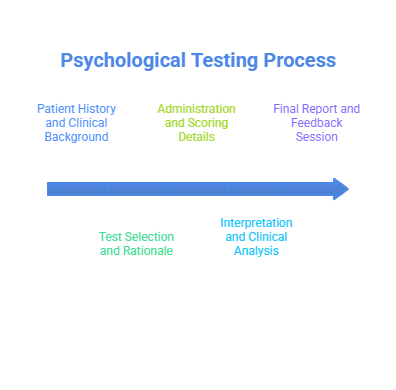
Documentation Requirements for Psychological Testing
Proper documentation is one of the most important aspects of billing psychological testing services. Insurance companies rely heavily on documentation when determining whether a claim meets coverage requirements.
Incomplete or unclear documentation is one of the most common reasons claims are denied during audits or reimbursement reviews.
A complete psychological testing record should include the following components.
Patient History and Clinical Background
Providers should document relevant patient information, including:
- Presenting symptoms
- Medical and psychiatric history
- Referral reason for testing
- Previous diagnoses or treatments
This information establishes medical necessity for performing psychological or neuropsychological testing.
Test Selection and Rationale
Clinicians must explain why specific tests were chosen. Documentation should include:
- Names of standardized tests administered
- Clinical reasoning for selecting those tests
- Areas of functioning being evaluated
This demonstrates that the testing process was purposeful and clinically appropriate.
Administration and Scoring Details
For services billed under 96136 and 96137, providers must document:
- Duration of testing sessions
- Tests administered
- Who administered the test
- Observations made during testing
These details support proper neuropsychological testing billing and ensure compliance with payer guidelines.
Interpretation and Clinical Analysis
Interpretation documentation should include:
- Analysis of test results
- Integration with patient history
- Diagnostic impressions
- Clinical recommendations
This component typically supports the evaluation codes 96130 and 96131.
Final Report and Feedback Session
A comprehensive psychological testing report should summarize:
- Assessment findings
- Diagnostic conclusions
- Treatment recommendations
- Patient feedback discussion
This report is often required by insurers to justify reimbursement.
Common Billing Mistakes in Neuropsychological Testing
Psychological testing services can be complex, and billing errors frequently occur when providers misunderstand coding rules or documentation requirements.
Avoiding these common mistakes can significantly reduce claim denials and compliance risks.
Billing Therapy Instead of Testing Codes: One of the most frequent errors is billing psychotherapy codes instead of psychological testing CPT codes. Testing services should only be billed using the appropriate assessment codes such as 96130–96137.
Missing or Incomplete Documentation: Insurance payers often deny claims when documentation fails to include:
- Time spent performing services
- Tests administered
- Interpretation of results
- Medical necessity justification
Clear documentation is essential for audit protection.
Incorrect Use of Add-On Codes: Add-on codes such as 96131 and 96137 cannot be billed independently.
They must always be reported alongside their primary codes:
- 96131 with 96130
- 96137 with 96136
Improper reporting can lead to automatic claim rejections.
Inaccurate Time Reporting: Because these services are time-based, billing more time than documented can create compliance risks.
Providers should ensure that:
- Time is tracked accurately
- Units billed match the documented duration
This is particularly important for providers managing complex neuropsychological testing billing workflows.
Reimbursement and Insurance Considerations
Insurance reimbursement for psychological testing services depends on several factors, including medical necessity, payer policies, and proper coding.
Understanding these factors can help healthcare providers optimize reimbursement and reduce billing delays.
Medical Necessity Requirements
Most insurers require clear documentation that psychological testing is medically necessary.
Common justifications include:
- Diagnostic clarification
- Evaluation of cognitive impairment
- Assessment of neurological conditions
- Treatment planning for mental health disorders
The medical record must demonstrate how testing results will influence patient care.
Prior Authorization Requirements
Some insurance companies require prior authorization before psychological or neuropsychological testing is performed.
Failing to obtain approval in advance can result in claim denials, even when services are medically necessary.
Practices should verify authorization requirements before scheduling testing appointments.
Frequency Limitations
Insurance plans may limit how often psychological testing can be billed within a specific timeframe.
Common restrictions include:
- Once per year for certain assessments
- Limits on the number of testing hours covered
Providers should confirm payer policies to avoid exceeding coverage limits.
Medicare Billing Considerations
Medicare provides coverage for psychological testing when services are medically necessary and properly documented.
Important Medicare considerations include:
- Services must be performed by qualified providers
- Detailed documentation is required
- Time-based billing rules must be followed
Following correct billing procedures ensures providers receive appropriate reimbursement for psychological assessment services.
Best Practices for Psychological Testing Billing
Implementing structured billing processes can help healthcare practices improve accuracy and prevent claim denials.
Some best practices include:
Maintain Detailed Testing Logs: Document the exact time spent administering tests and interpreting results.
Verify Insurance Coverage: Confirm that the patient’s insurance plan covers psychological or neuropsychological testing before services are provided.
Separate Therapy and Testing Services: Testing services should be documented and billed separately from psychotherapy sessions.
Use Add-On Codes Correctly: Ensure that codes 96131 and 96137 are only billed alongside their corresponding primary codes.
Train Staff on Coding Guidelines: Billing staff should understand psychological testing CPT codes and payer-specific policies to avoid common errors.
Implementing these strategies can improve billing efficiency and help practices maintain compliance with insurance regulations.
Psychological Testing Billing Support for Mental Health Providers
Billing for psychological assessments can become complicated due to time-based coding rules, documentation requirements, and payer-specific regulations. Many mental health practices struggle with claim denials, reimbursement delays, and compliance challenges when managing billing internally.
Working with experienced mental health billing specialists can help practices streamline claim submission, ensure accurate coding, and optimize reimbursement for psychological testing services.
Final Thoughts
Psychological assessments are critical for diagnosing cognitive and behavioral conditions, but billing these services correctly requires a clear understanding of coding rules and documentation standards.
The primary psychological testing CPT codes 96130, 96131, 96136, and 96137 are used to report test administration, evaluation, and interpretation services. When providers follow proper CPT 96130 billing guidelines, maintain thorough documentation, and apply time-based billing rules accurately, they can reduce claim denials and improve reimbursement outcomes.
For mental health practices looking to improve revenue cycle efficiency and simplify behavioral health billing, specialized support can make a significant difference.