
Choosing the best podiatry EMR and EHR software can directly impact the quality of patient care, clinic efficiency, and long-term practice growth. As podiatry clinics handle everything from diabetic foot care and wound management to surgical procedures and custom orthotics, relying on generic electronic health record systems often creates unnecessary administrative work and limits productivity.
A specialized podiatry EHR is built around the unique workflows of foot and ankle specialists, helping providers streamline documentation, simplify appointment scheduling, automate medical billing, manage diagnostic imaging, and maintain secure patient records from a single platform.
Whether you’re running a solo clinic or managing a multi-provider practice, the right podiatry electronic medical records system can reduce documentation time, improve reimbursement rates, and enhance the overall patient experience.
Quick Comparison of the Best Podiatry EMR & EHR Software
Before diving into the details, here’s a side-by-side comparison of the leading podiatry EHR solutions. Each platform offers unique strengths depending on your practice size, specialty requirements, and budget.
| Software | Best For | Deployment | Key Strength |
| ModMed | Specialty podiatry practices | Cloud | Specialty-specific documentation and imaging |
| Nextech | Growing clinics | Cloud | Workflow automation and practice management |
| DrChrono | Small and mobile practices | Cloud | iPad compatibility and customization |
| AdvancedMD | Multi-provider practices | Cloud | Integrated billing and scheduling |
| athenahealth | Large healthcare organizations | Cloud | Revenue cycle management and interoperability |
| CureMD | Budget-conscious practices | Cloud | Affordable all-in-one platform |
| eClinicalWorks | Enterprise clinics | Cloud | Extensive integrations and patient engagement |
| Tebra | Independent practices | Cloud | Patient communication and online scheduling |
| Practice Fusion | Small clinics | Cloud | Simple interface and lower cost entry |
| RXNT | Practices seeking flexibility | Cloud | E-prescribing and billing tools |
1. ModMed
Best for: Specialty Podiatry Practices
ModMed is one of the most recognized podiatry EHR platforms because it is designed specifically for foot and ankle specialists. Instead of relying on generic documentation, it provides specialty focused workflows that help clinicians spend less time charting and more time with patients.
Key Features
- Specialty podiatry templates
- Integrated medical imaging
- Digital charting
- Practice management
- Medical billing
- E-prescribing
- Patient portal
- Telehealth
Pros
- Built specifically for podiatry
- Excellent documentation workflow
- Strong imaging capabilities
- Comprehensive reporting
Cons
- Premium pricing
- Learning curve for new users
2. Nextech
Best for: Expanding Private Practices
Nextech combines EHR, practice management, billing, and analytics into one platform. It is ideal for podiatry clinics planning to scale operations without switching software later.
Key Features
- Appointment scheduling
- Revenue cycle management
- Claims management
- Mobile access
- Analytics dashboard
- HIPAA-compliant cloud storage
Pros
- Excellent automation
- Powerful financial reporting
- Scalable platform
Cons
- Higher implementation cost
- Advanced features may require additional training
3. DrChrono
Best for: Small Clinics and Mobile Providers
DrChrono is widely appreciated for its intuitive interface and mobile accessibility. It allows providers to document visits directly from tablets while offering flexible customization.
Key Features
- Custom clinical templates
- Voice dictation
- Medical billing
- Telehealth
- Online scheduling
- Patient portal
Pros
- Easy to use
- Highly customizable
- Affordable entry plans
Cons
- Some advanced features require premium plans
4. AdvancedMD
Best for: Multi-Provider Practices
AdvancedMD provides an integrated solution that combines EHR, scheduling, billing, and reporting. Practices managing multiple physicians often benefit from its centralized workflow.
Key Features
- Workflow automation
- Electronic prescribing
- Integrated billing
- Reporting dashboards
- Appointment reminders
- Patient engagement tools
Pros
- Strong billing capabilities
- Excellent scheduling features
- Reliable customer support
Cons
- Interface can feel dated
- Initial setup may take time
5. athenahealth
Best for: Large Practices
athenahealth is known for its interoperability and revenue cycle expertise. It helps practices improve reimbursement while maintaining seamless connectivity with other healthcare systems.
Key Features
- Cloud-based EHR
- Billing automation
- Claims management
- Patient portal
- Population health reporting
- Third-party integrations
Pros
- Excellent interoperability
- Strong revenue cycle management
- Frequent updates
Cons
- Higher monthly costs
- Better suited for larger organizations
6. CureMD
Best for: Budget-Friendly Practices
CureMD offers an affordable podiatry EHR solution without sacrificing essential functionality. It is suitable for independent practices looking for an all-in-one platform.
Key Features
- Electronic medical records
- Billing
- Scheduling
- E-prescribing
- Telehealth
- Patient communication
Pros
- Competitive pricing
- Easy implementation
- Comprehensive feature set
Cons
- User interface could be more modern
7. eClinicalWorks
Best for: Enterprise Healthcare Networks
eClinicalWorks supports organizations requiring advanced interoperability and patient engagement capabilities. It is commonly adopted by larger healthcare groups.
Key Features
- Population health management
- Telehealth
- AI-assisted documentation
- Patient portal
- Billing
- Extensive integrations
Pros
- Robust ecosystem
- Strong reporting
- Enterprise ready
Cons
- Can be complex for smaller clinics
8. Tebra
Best for: Independent Podiatry Practices
Tebra focuses on helping practices attract patients while simplifying daily operations through scheduling, billing, and communication tools.
Key Features
- Online booking
- Digital forms
- Reputation management
- Billing
- Patient messaging
Pros
- Excellent patient engagement
- Easy onboarding
- Modern interface
Cons
- Limited specialty-specific workflows
9. Practice Fusion
Best for: Small Practices
Practice Fusion offers a straightforward cloud-based EHR that is easy to adopt and maintain.
Key Features
- Clinical documentation
- E-prescribing
- Scheduling
- Patient records
- Billing integrations
Pros
- User friendly
- Lower upfront costs
- Quick implementation
Cons
- Fewer specialty customization options
10. RXNT
Best for: Flexible Practice Management
RXNT combines electronic health records, billing, scheduling, and prescription management into a unified platform.
Key Features
- E-prescribing
- Practice management
- Revenue cycle management
- Mobile accessibility
- Appointment scheduling
Pros
- Flexible pricing
- Strong prescription management
- Easy deployment
Cons
- Reporting features could be more advanced
Which Podiatry EMR Is Best for Your Practice?
The right solution depends on your clinic’s size, patient volume, and operational priorities.
| Practice Type | Recommended Software |
| Solo Practice | DrChrono, CureMD |
| Small Private Practice | Tebra, Practice Fusion |
| Growing Clinic | Nextech, AdvancedMD |
| Large Healthcare Organization | athenahealth, eClinicalWorks |
| Specialty Focused Podiatry Clinic | ModMed |
Features Every Great Podiatry EHR Should Include
When evaluating podiatry electronic medical records systems, prioritize solutions that include:
- Specialty-specific podiatry templates
- Medical imaging integration
- Orthotics documentation
- Procedure coding support
- Appointment scheduling
- Electronic prescribing
- Revenue cycle management
- Insurance verification
- HIPAA-compliant cloud infrastructure
- Patient portal
- Telehealth
- Analytics and reporting
- Mobile accessibility
- Workflow automation
To ensure these platforms translate to optimal financial returns, practices can also leverage specialized medical billing services to manage claims efficiently alongside their chosen EMR software.
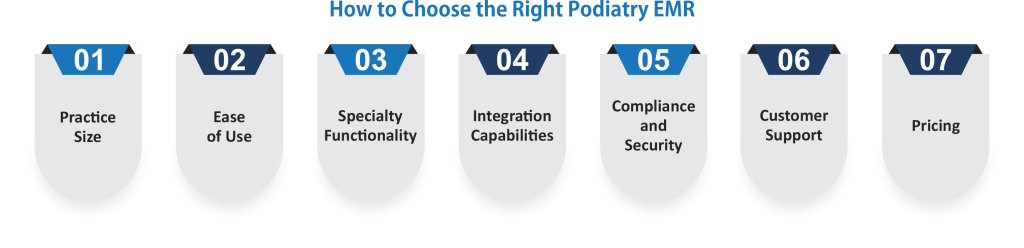
How to Choose the Right Podiatry EMR
Before investing in a podiatry EHR, consider the following factors:
Practice Size: Choose software that matches your current patient volume while supporting future expansion.
Ease of Use: A clean interface reduces training time and encourages staff adoption.
Specialty Functionality: Look for templates, imaging tools, orthotics tracking, and workflow automation designed specifically for podiatry.
Integration Capabilities: Ensure the software integrates with laboratories, imaging systems, billing platforms, and other healthcare technologies.
Compliance and Security: Verify HIPAA compliance, encryption standards, access controls, and data backup capabilities.
Customer Support: Reliable onboarding, training, and ongoing support are essential for minimizing downtime.
Pricing: Compare subscription costs, implementation fees, support charges, and contract terms to understand the total cost of ownership.
Additionally, to ensure all physicians utilizing the EMR software are properly credentialed across insurance networks without administrative drag, clinics often incorporate professional medical credentialing services.
Conclusion
Selecting the best podiatry EMR or EHR software is more than a technology decision. It’s an investment in your practice’s efficiency, patient satisfaction, and long-term success. Whether you’re looking for specialty-focused documentation, streamlined billing, advanced reporting, or seamless interoperability, the right solution should align with your clinical workflows and business goals.
Take the time to compare features, evaluate implementation costs, and request demonstrations before making a decision. A well-chosen podiatric management system can simplify day-to-day operations, reduce administrative burden, improve revenue cycle performance, and help your practice deliver exceptional patient care while remaining ready for future growth.