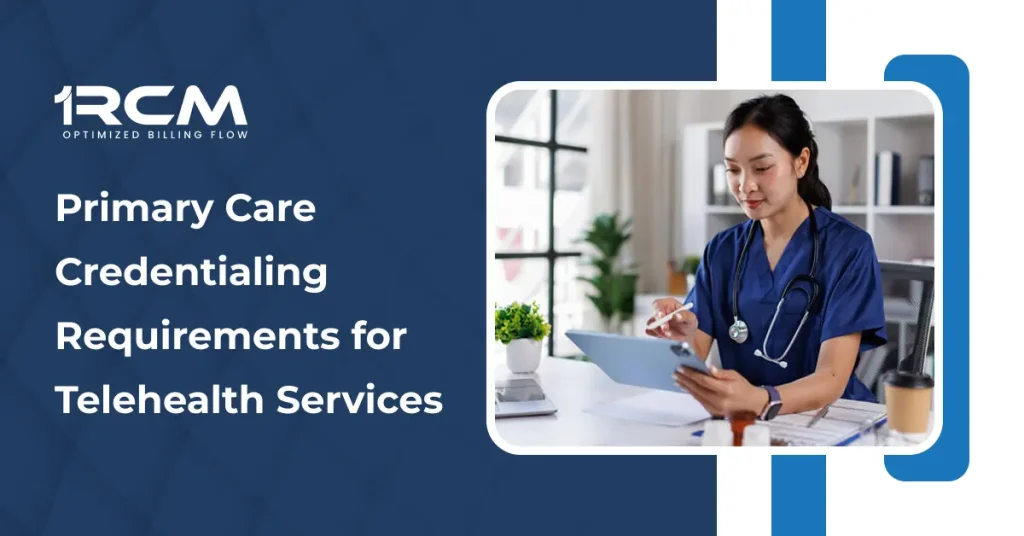
Telehealth has transformed the way primary care providers connect with patients, making healthcare more accessible, convenient, and efficient than ever before. However, delivering virtual care involves more than choosing the right technology or scheduling online appointments. Before providers can legally practice, bill insurance companies, or receive reimbursements for telehealth services, they must meet specific medical credentialing requirements.
From obtaining the appropriate state licenses and maintaining an active CAQH profile to completing payer enrollment and complying with federal and state regulations, every step plays a critical role in building a compliant and successful telehealth practice.
What Is Primary Care Credentialing for Telehealth?
Primary care credentialing for telehealth is the process of verifying that healthcare providers have the qualifications, licenses, certifications, and professional experience required to deliver virtual medical services. It ensures that physicians, nurse practitioners, physician assistants, and other eligible providers meet the standards established by insurance companies, government healthcare programs, and regulatory authorities before they begin treating patients online.
Credentialing is a critical part of launching or expanding a telehealth practice because it protects patients while allowing providers to participate in insurance networks and receive reimbursement for virtual care.
Without proper credentialing, providers may face claim denials, delayed payments, compliance issues, or restrictions on practicing across state lines.
Why Telehealth Providers Need Credentialing?
Although telehealth changes how care is delivered, it does not eliminate the need for credentialing. Virtual healthcare providers are expected to meet many of the same professional and regulatory standards as those practicing in traditional clinical settings.
Proper credentialing allows telehealth providers to:
- Bill Medicare, Medicaid, and commercial insurance plans
- Join payer networks
- Demonstrate professional credibility
- Meet federal and state compliance requirements
- Reduce claim denials and reimbursement delays
- Build trust with patients and healthcare partners
For providers practicing across multiple states, credentialing also helps ensure compliance with each state’s licensing and payer requirements, making it an essential part of expanding telehealth services.
Credentialing vs. Provider Enrollment vs. Licensing
These terms are often used interchangeably, but they serve different purposes.
| Process | Purpose | Why It Matters |
| Licensing | Grants legal authority to practice medicine within a state. | Required before providing patient care. |
| Credentialing | Verifies a provider’s education, qualifications, experience, and professional history. | Determines whether a provider meets payer and organizational standards. |
| Provider Enrollment | Registers credentialed providers with insurance companies and government healthcare programs. | Allows providers to bill and receive reimbursement for covered services. |
Why Credentialing Matters for Telehealth Primary Care?
Credentialing is far more than an administrative requirement, it is the foundation of a compliant, financially sustainable, and patient-centered telehealth practice. As virtual healthcare continues to grow, insurance companies and regulatory agencies have strengthened their verification processes to ensure providers meet established quality and safety standards.
One of the biggest advantages of credentialing is access to insurance reimbursement. Most public and private payers require providers to complete credentialing and enrollment before they will process claims for telehealth services. Failing to complete this process can result in denied claims, delayed payments, or lost revenue.
Credentialing also strengthens patient confidence. Patients are more likely to trust providers whose qualifications have been thoroughly verified, particularly when receiving care remotely. This trust contributes to stronger patient relationships and improved satisfaction.
Primary Care Credentialing Requirements for Telehealth Services
Successfully delivering virtual primary care requires meeting several credentialing requirements before treating patients or billing insurance companies. These requirements help verify a provider’s qualifications while ensuring compliance with payer policies and healthcare regulations.
Although specific requirements may vary by state and insurance carrier, most credentialing processes include the following components:
1. Active State Medical License
An active and unrestricted state medical license is the foundation of telehealth credentialing. In most cases, providers must hold a valid license in the state where the patient is physically located during the virtual visit.
For practices serving patients across multiple states, obtaining additional licenses is often necessary to remain compliant and expand access to care.
Keeping licenses current through timely renewals is equally important to avoid disruptions in patient care and reimbursement.
2. National Provider Identifier (NPI)
A National Provider Identifier (NPI) is a unique 10-digit number assigned to healthcare providers for identification during billing and administrative transactions. Most insurance companies require an active NPI before processing credentialing applications or enrolling providers in their networks.
Providers should ensure their NPI information matches all credentialing documents to prevent unnecessary delays.
3. DEA Registration (When Applicable)
Providers who prescribe controlled substances through telehealth must maintain an active Drug Enforcement Administration (DEA) registration. Depending on state and federal regulations, additional requirements may apply when prescribing medications virtually.
Verifying that DEA registration is valid and consistent with licensing records helps ensure compliance and uninterrupted prescribing authority.
4. Education and Training Verification
Credentialing organizations verify a provider’s educational background to confirm they have completed the required medical education and clinical training. This typically includes medical school, residency, fellowship programs, and any specialized training relevant to primary care. Verification is conducted directly with educational institutions or approved primary sources to ensure authenticity.
5. Board Certification (When Required)
While board certification is not always mandatory, many insurance payers and healthcare organizations consider it an important credential. Board-certified providers often have greater opportunities to participate in payer networks and demonstrate advanced expertise in their specialty.
Maintaining certification through continuing education and recertification requirements also supports long-term credentialing success.
6. Primary Source Verification
Primary Source Verification (PSV) is the process of confirming a provider’s credentials directly with the original issuing organizations. This includes verifying medical licenses, education, residency completion, board certifications, and other professional qualifications.
Primary source verification helps maintain the accuracy of credentialing records while meeting industry accreditation standards.
7. Professional Work History Review
A complete review of a provider’s professional work history allows credentialing organizations to evaluate clinical experience and identify any unexplained employment gaps. Most payers request several years of employment history along with details about previous hospital privileges, practice affiliations, or healthcare organizations where the provider has worked. Providing accurate and consistent information helps streamline the review process.
8. Malpractice Insurance Verification
Professional liability insurance is an essential requirement for most telehealth providers. During credentialing, insurance companies verify that providers carry active malpractice coverage that meets required policy limits.
Maintaining continuous coverage protects both providers and patients while supporting participation in insurance networks.
9. Malpractice Claims Review
In addition to verifying insurance coverage, credentialing organizations review a provider’s malpractice claims history. Previous claims or settlements do not automatically prevent credentialing, but they may require additional documentation or review by payer credentialing committees. A transparent claims history helps facilitate a smoother evaluation process.
10. Background Screenings
Background screenings help ensure providers meet professional and ethical standards before joining insurance networks. Credentialing organizations commonly review criminal background information, sanctions, exclusions, disciplinary actions, and records from databases such as the Office of Inspector General (OIG), the National Practitioner Data Bank (NPDB), and the System for Award Management (SAM). These screenings protect patients and reduce organizational risk.
11. CAQH Profile Completion
The Council for Affordable Quality Healthcare (CAQH) profile serves as a centralized repository for provider credentialing information. Most commercial insurance companies require providers to maintain an accurate and regularly updated CAQH profile before beginning the credentialing process.
Keeping documents current and reattesting information on schedule can significantly reduce processing delays.
12. Provider Enrollment with Medicare, Medicaid, and Commercial Payers
Credentialing alone does not authorize providers to bill insurance companies. After credentialing is approved, providers must complete enrollment with Medicare, Medicaid, and each commercial payer they intend to work with.
Enrollment allows providers to submit claims and receive reimbursement for telehealth services. Because processing times vary by payer, beginning enrollment as early as possible can help avoid unnecessary delays in launching virtual care services.
Telehealth-Specific Credentialing Requirements
While many credentialing requirements for telehealth providers are similar to those for traditional practices, virtual care introduces additional compliance responsibilities. Providers must understand not only payer credentialing requirements but also the legal and operational standards that govern remote healthcare delivery.
Patient Location Laws
Telehealth providers are generally required to hold a valid medical license in the state where the patient is located during the appointment. Since state laws vary, providers should review licensing and practice requirements before offering services to patients in new jurisdictions.
Multi-State Credentialing
Expanding a telehealth practice across state lines often requires additional state licenses and separate payer credentialing for each state. Establishing a clear credentialing strategy helps practices expand efficiently while minimizing administrative delays.
Telehealth Consent Policies
Many states require providers to obtain informed consent before delivering telehealth services. This consent should explain how virtual care works, any limitations of remote treatment, privacy protections, and the patient’s rights. Keeping consent forms updated and properly documented supports regulatory compliance.
Virtual Practice Address Requirements
Some insurance companies and state agencies require providers to maintain a valid practice address, even when services are delivered remotely. Using accurate business information across licensing records, payer applications, and credentialing documents helps prevent processing delays.
Technology Compliance
Telehealth platforms should support secure communication and protect patient information. Providers should use systems that comply with privacy and security regulations, implement strong authentication measures, encrypt patient data, and maintain detailed documentation of virtual visits.
Medicare Credentialing Requirements for Telehealth Providers
Providers who plan to treat Medicare beneficiaries through telehealth must complete Medicare enrollment before submitting claims. This process includes verifying professional credentials, maintaining active licensure, and ensuring provider information remains current.
Medicare providers should also monitor revalidation deadlines, maintain accurate enrollment records, and comply with all applicable billing and documentation requirements. Failure to update enrollment information may result in payment interruptions or enrollment deactivation.
Medicaid Credentialing Requirements
Unlike Medicare, Medicaid credentialing requirements are administered at the state level. Each state’s Medicaid program establishes its own enrollment procedures, documentation requirements, and processing timelines.
Providers offering telehealth services to Medicaid beneficiaries should verify their state’s eligibility requirements, covered telehealth services, and billing policies before seeing patients. Completing Medicaid enrollment early helps avoid reimbursement delays.
Commercial Insurance Credentialing Requirements
Commercial insurance companies require providers to complete credentialing before joining their networks. Although documentation requirements are generally similar across payers, each insurer has its own review process and timeline.
Commercial payer credentialing typically includes:
- License verification
- Education and training review
- Board certification verification (when applicable)
- Malpractice insurance review
- Work history verification
- Background screening
- CAQH profile review
Submitting complete and accurate applications can significantly reduce approval times and improve the likelihood of first-time acceptance.
Credentialing by Proxy for Telehealth
Credentialing by proxy allows one healthcare organization to rely on another organization’s credentialing decisions under specific agreements. This approach is commonly used in hospital and telehealth partnerships to reduce duplicate credentialing efforts.
When implemented correctly, credentialing by proxy can:
- Accelerate provider onboarding
- Reduce administrative workload
- Improve operational efficiency
- Maintain consistent quality standards
However, organizations must ensure all regulatory and contractual requirements are satisfied before using this approach.
Step-by-Step Primary Care Credentialing Process
Successfully completing telehealth credentialing involves several coordinated steps.
Step 1: Gather Required Documents
Collect licenses, certifications, malpractice insurance, identification documents, educational records, and employment history before beginning applications.
Step 2: Complete Your CAQH Profile
Enter accurate provider information and upload all required documentation. Regularly review and update your profile to prevent credentialing delays.
Step 3: Submit Credentialing Applications
Complete applications for Medicare, Medicaid, and commercial insurance companies, ensuring all information is accurate and consistent.
Step 4: Primary Source Verification
Credentialing organizations verify licenses, education, certifications, and other qualifications directly with issuing organizations.
Step 5: Credentialing Committee Review
Many insurance companies conduct a final review through an internal credentialing committee before approving providers for network participation.
Step 6: Complete Provider Enrollment
After credentialing approval, finalize enrollment with each payer to begin submitting claims for reimbursement.
Step 7: Maintain Ongoing Compliance
Monitor expiration dates, renew licenses, update your CAQH profile, and complete recredentialing requirements as scheduled.
Documents Required for Telehealth Credentialing
| Document | Required |
| State Medical License | ✔ |
| National Provider Identifier (NPI) | ✔ |
| DEA Registration (if applicable) | ✔ |
| Curriculum Vitae (CV) | ✔ |
| Medical School Diploma | ✔ |
| Residency Certificate | ✔ |
| Fellowship Certificate (if applicable) | As Needed |
| Board Certification | Often Required |
| Government-Issued Identification | ✔ |
| Malpractice Insurance Certificate | ✔ |
| W-9 Form | ✔ |
| Work History | ✔ |
| CAQH Profile | ✔ |
How Long Does Telehealth Credentialing Take?
Credentialing timelines vary depending on the payer, provider responsiveness, and document accuracy.
Typical timeframes include:
- Medicare: Approximately 30–90 days
- Medicaid: Approximately 30–120 days, depending on the state
- Commercial Insurance: Approximately 60–180 days
Submitting complete documentation, responding promptly to requests, and maintaining an updated CAQH profile can help shorten the process.
Common Reasons Credentialing Gets Delayed
Credentialing delays often occur because of avoidable mistakes, including:
- Expired medical licenses
- Incomplete credentialing applications
- Missing supporting documents
- Outdated CAQH information
- Inconsistent provider information across applications
- Unexplained employment gaps
- Delayed responses to payer requests
- Lapsed malpractice insurance
Regularly reviewing application materials before submission can significantly reduce processing delays.
How to Speed Up Telehealth Credentialing?
Although credentialing requires thorough verification, providers can make the process more efficient by:
- Keeping all credentials current
- Updating CAQH information regularly
- Maintaining organized digital records
- Monitoring license and certification renewal dates
- Responding quickly to payer requests
- Starting credentialing well before planned launch dates
- Working with experienced credentialing specialists when appropriate
Common Compliance Mistakes Telehealth Providers Make
Even experienced providers can encounter compliance issues. Common mistakes include:
- Practicing in states where they are not licensed
- Billing insurance before enrollment is complete
- Allowing licenses or malpractice insurance to expire
- Neglecting CAQH profile updates
- Missing recredentialing deadlines
- Using incorrect telehealth billing codes or modifiers
- Inadequate documentation of virtual visits
Avoiding these errors helps reduce legal risks, claim denials, and disruptions to patient care.
Credentialing vs. Licensing vs. Privileging
| Process | Purpose | Who Grants It |
| Licensing | Authorizes a provider to practice medicine. | State licensing board |
| Credentialing | Verifies a provider’s qualifications and professional history. | Insurance companies and healthcare organizations |
| Privileging | Grants permission to perform specific clinical services within a healthcare facility. | Hospitals and healthcare facilities |
Understanding these distinctions helps providers complete each requirement in the correct sequence.
Summary
Primary care credentialing is the foundation of a compliant and financially successful telehealth practice. From obtaining the appropriate state licenses and verifying professional qualifications to completing payer enrollment and maintaining ongoing compliance, every step plays a vital role in ensuring providers can deliver high-quality virtual care while receiving timely reimbursement.
Although the credentialing process can seem complex, staying organized, keeping documentation up to date, and proactively monitoring renewal deadlines can help prevent unnecessary delays and compliance issues.
Whether you’re launching a new telehealth practice or expanding into additional markets, investing time in proper credentialing today will position your organization for long-term growth, stronger payer relationships, and a seamless experience for both providers and patients.